Protecting Charleston
Fort Sumter and Fort Moultrie National Historic Park

We spent a fascinating day exploring the history of Charleston Harbor, visiting both Fort Sumter and Fort Moultrie National Historic Park.
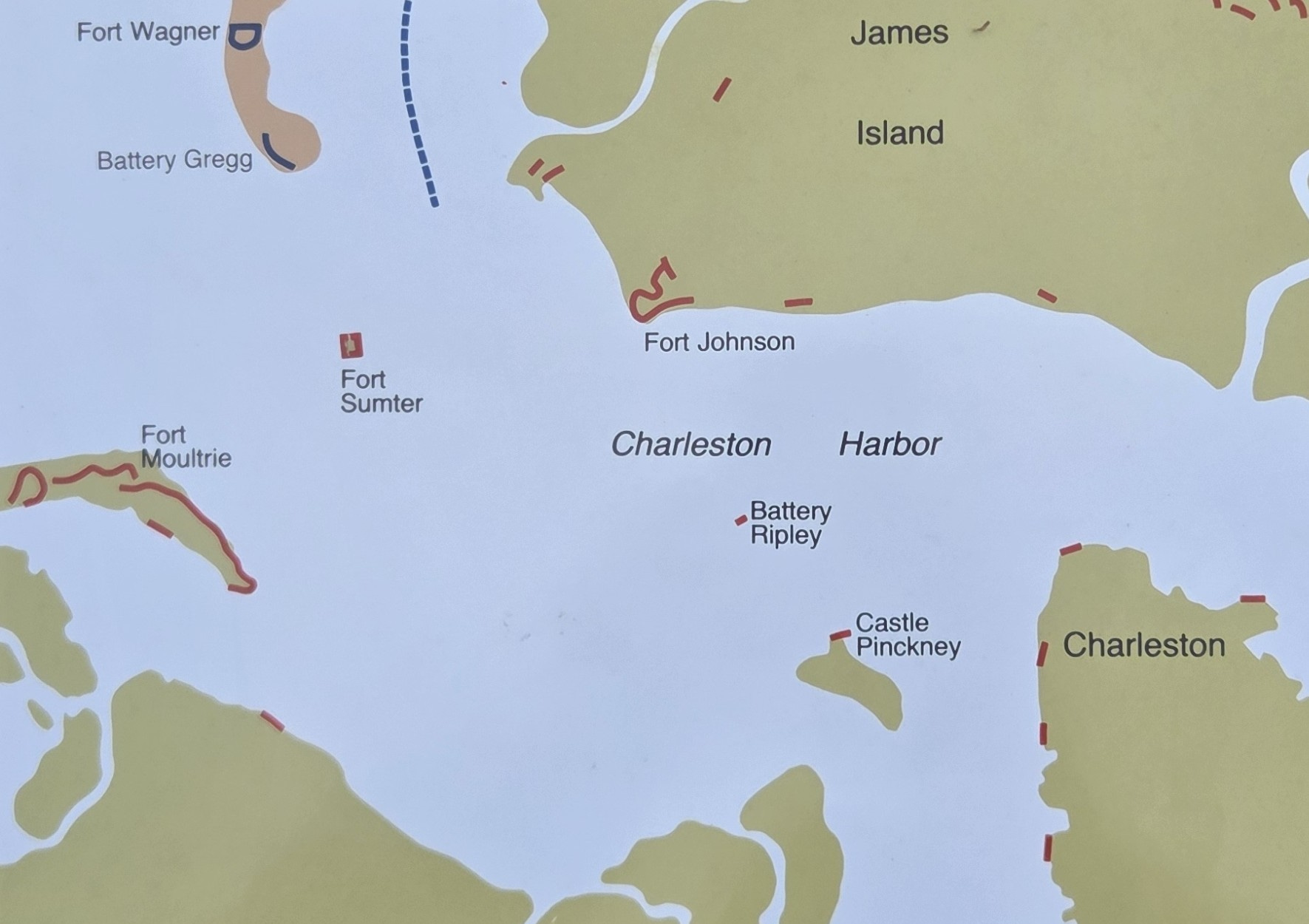
Located on an island at the entrance of Charleston Harbor, Fort Sumter is named after Thomas Sumter, a hero of the Revolutionary War. It gained historical fame as the site where Confederate forces fired the first shots of the Civil War on April 12, 1861.
Fort Moultrie, opposite Fort Sumter on the mainland, has defended Charleston across the Revolutionary War, the Civil War, and World Wars I and II!
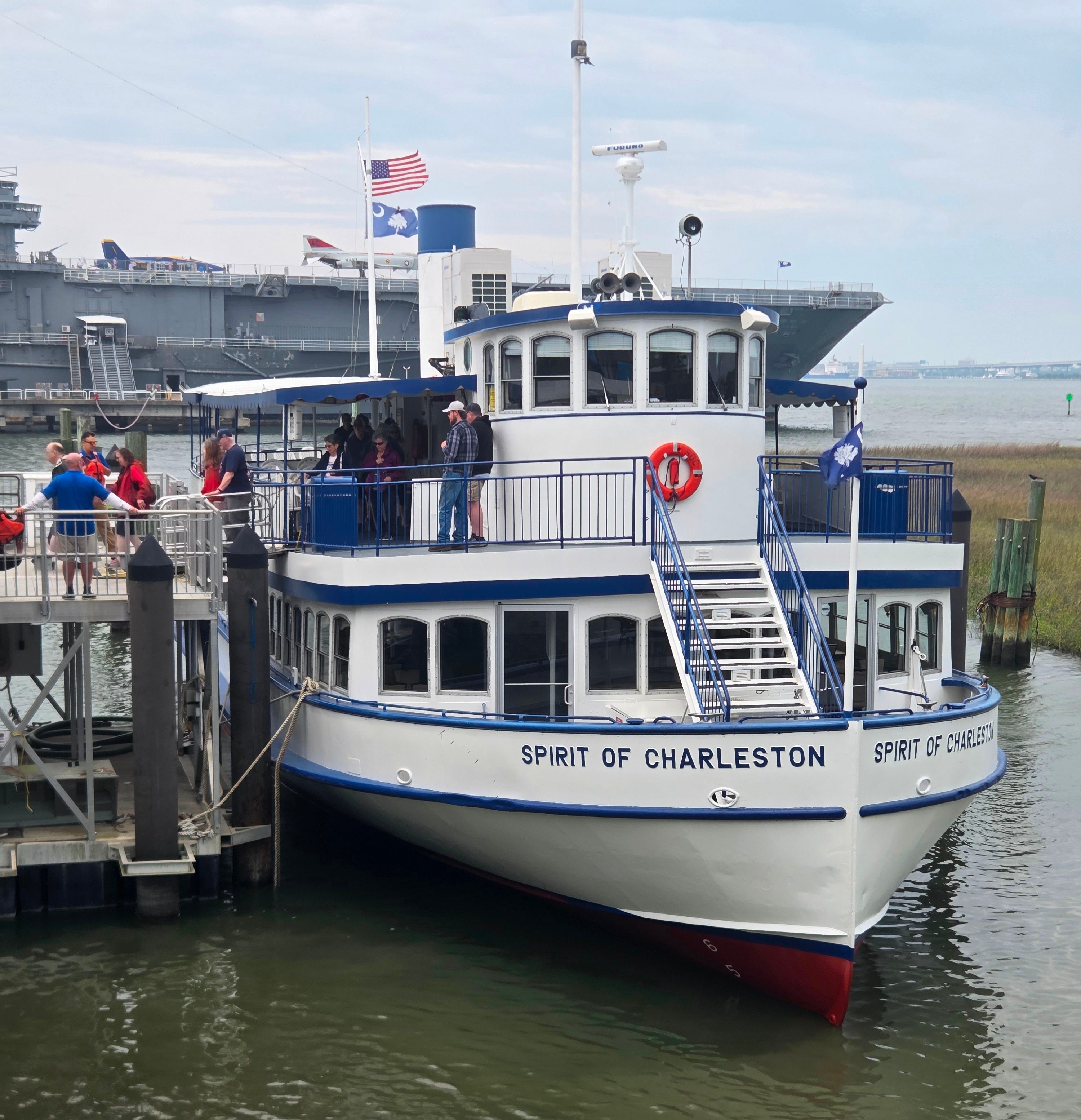
Our day began with the 30 minute, NPS tour-operator boat from Patriot’s Point out to Fort Sumter.
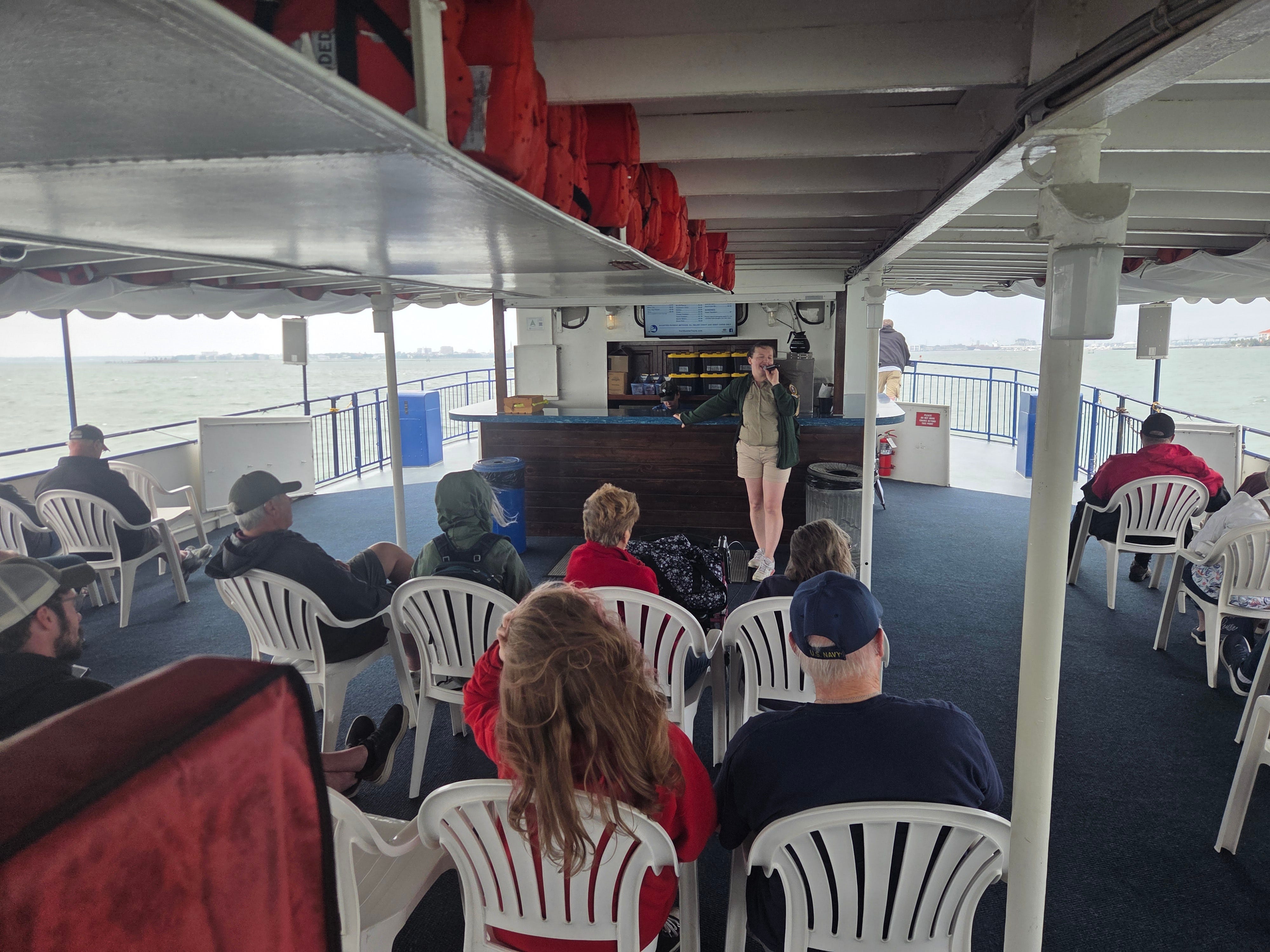
The NPS Volunteer on the boat provided wonderful descriptions of the fort’s history and what we’d see when we arrived for our hour+ visit to the site.
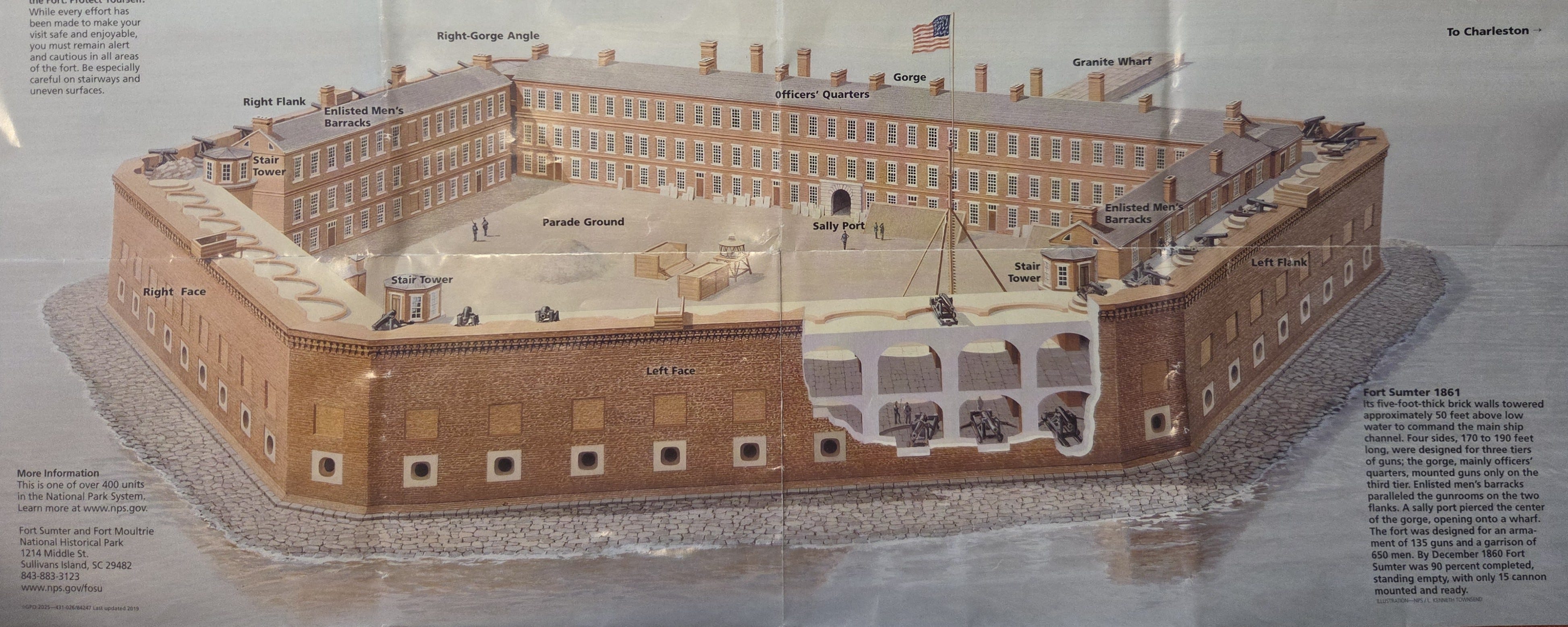
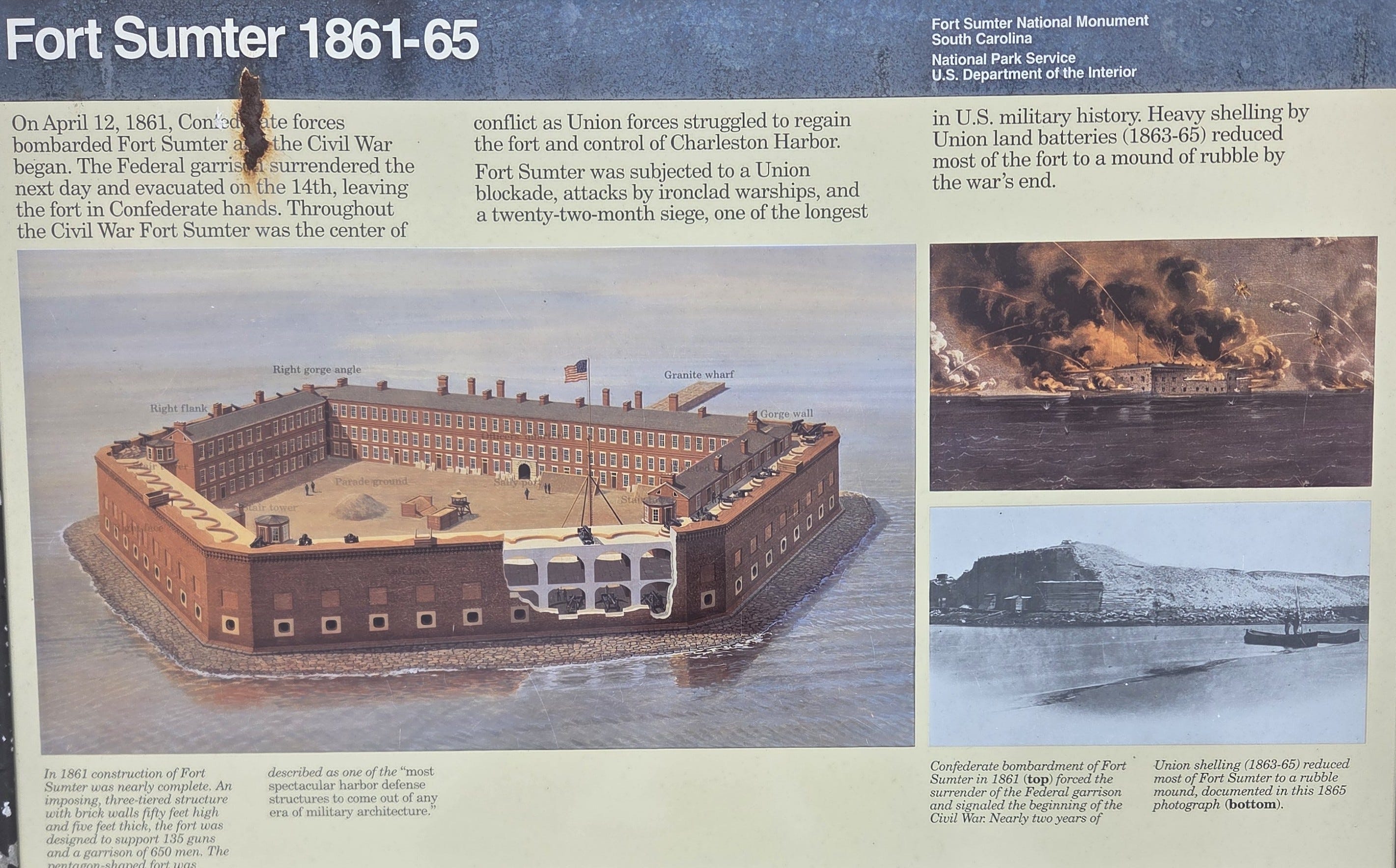
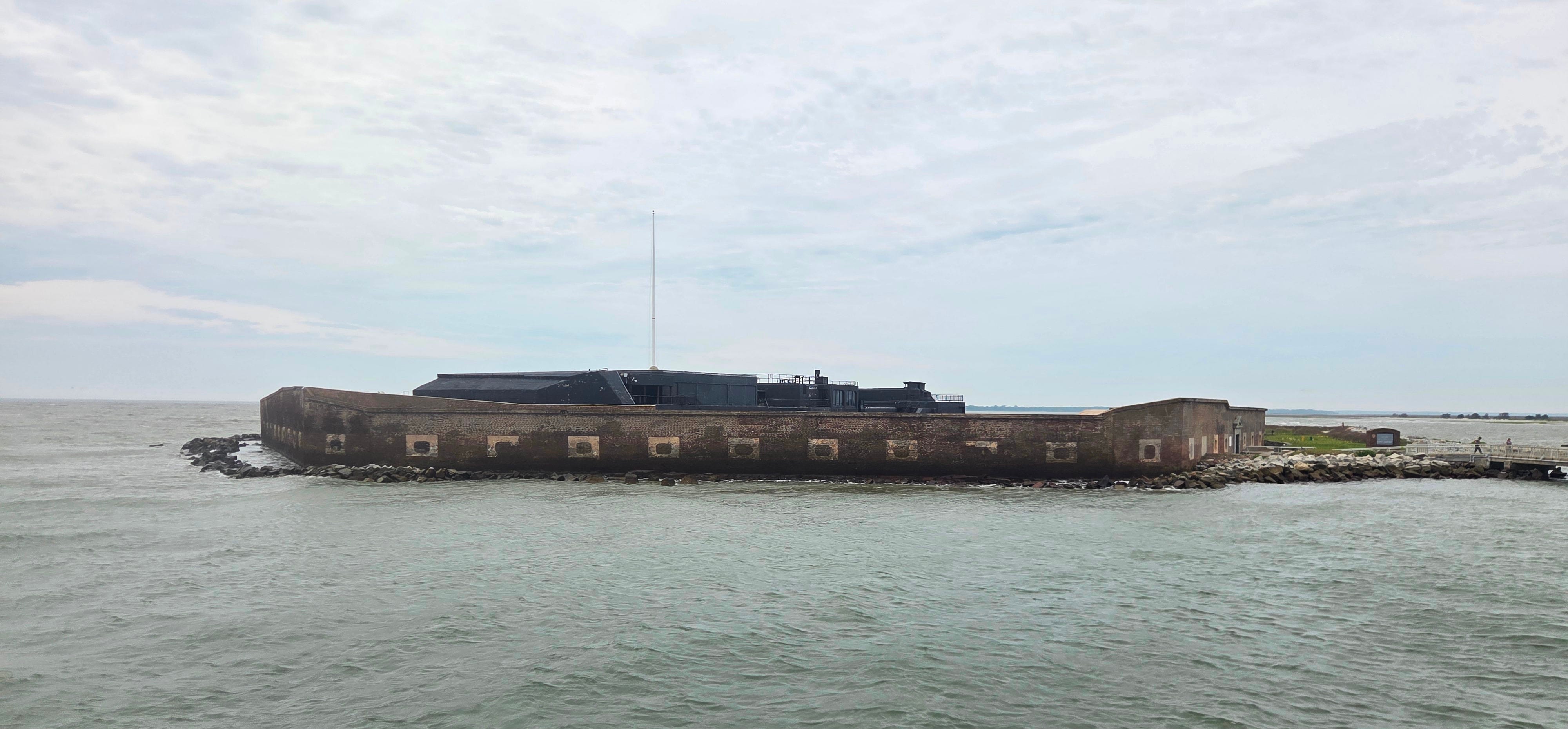
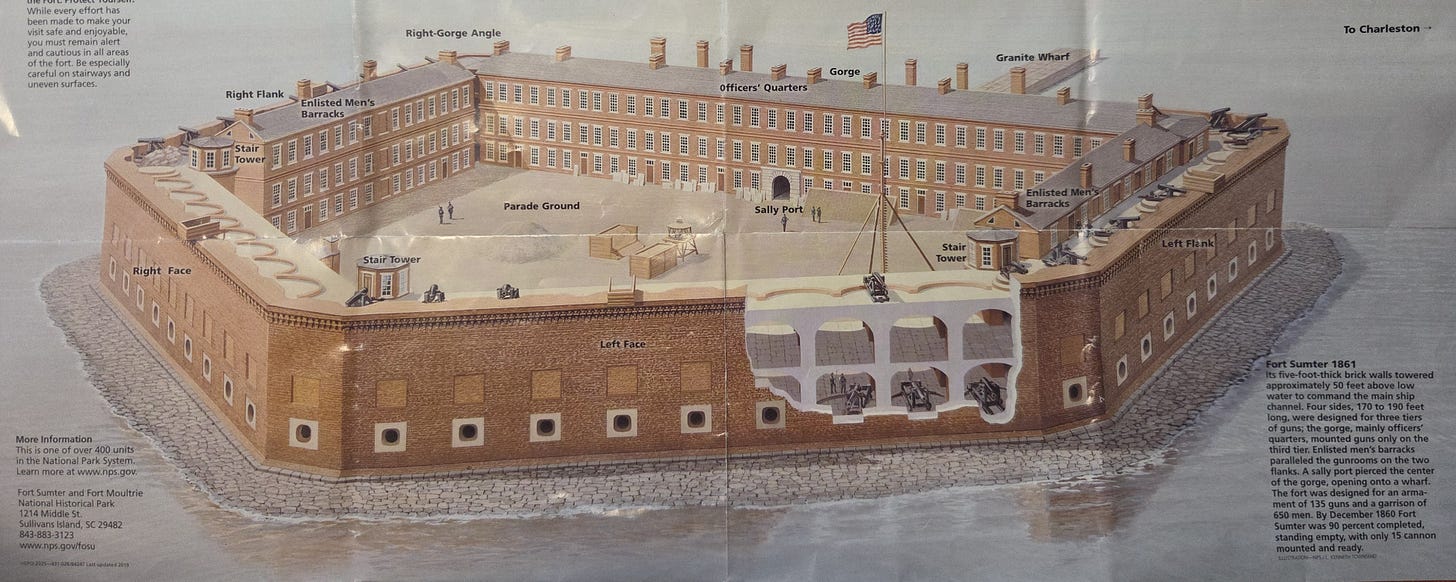
Here’s Fort Sumter as our ferry arrived — while it may look modest to the modern eye, in its day it was very impressive, designed with 5-foot thick brick walls 50-feet high, holding 650 soldiers and sporting 135 cannons.
Here’s Nancy in the courtyard, with several cannons on display.
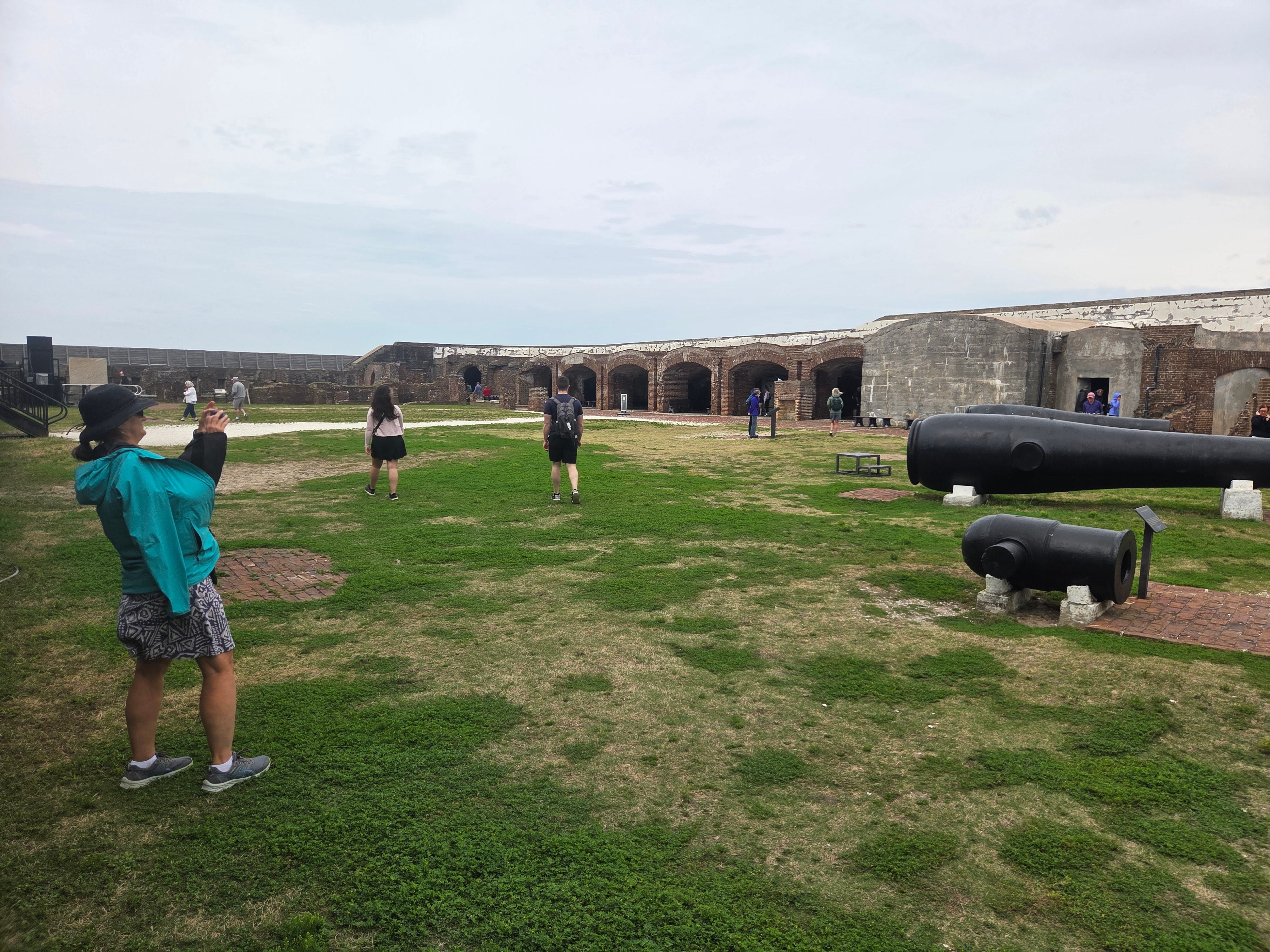
Fort Sumter changed hands several times — just as Castillo de San Marcos and Fort Matanzas in St. Augustine did — initially being held by a Union officer, then the Confederates for almost four years, then finally the Union Army retook Fort Sumter in February 1865.
Fort Moultrie sported big guns, too, but in more modern, WW I & II gun placements.
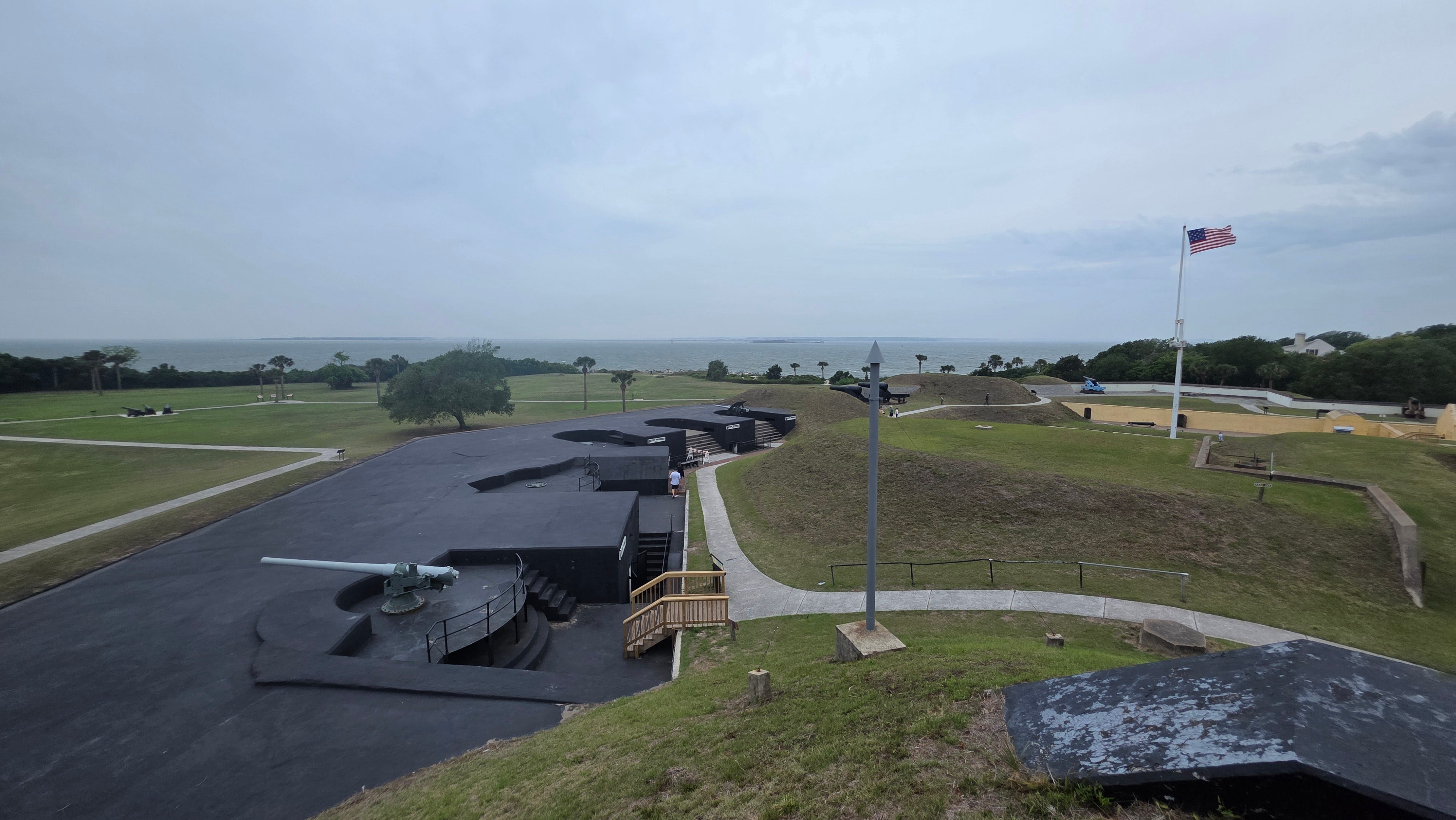
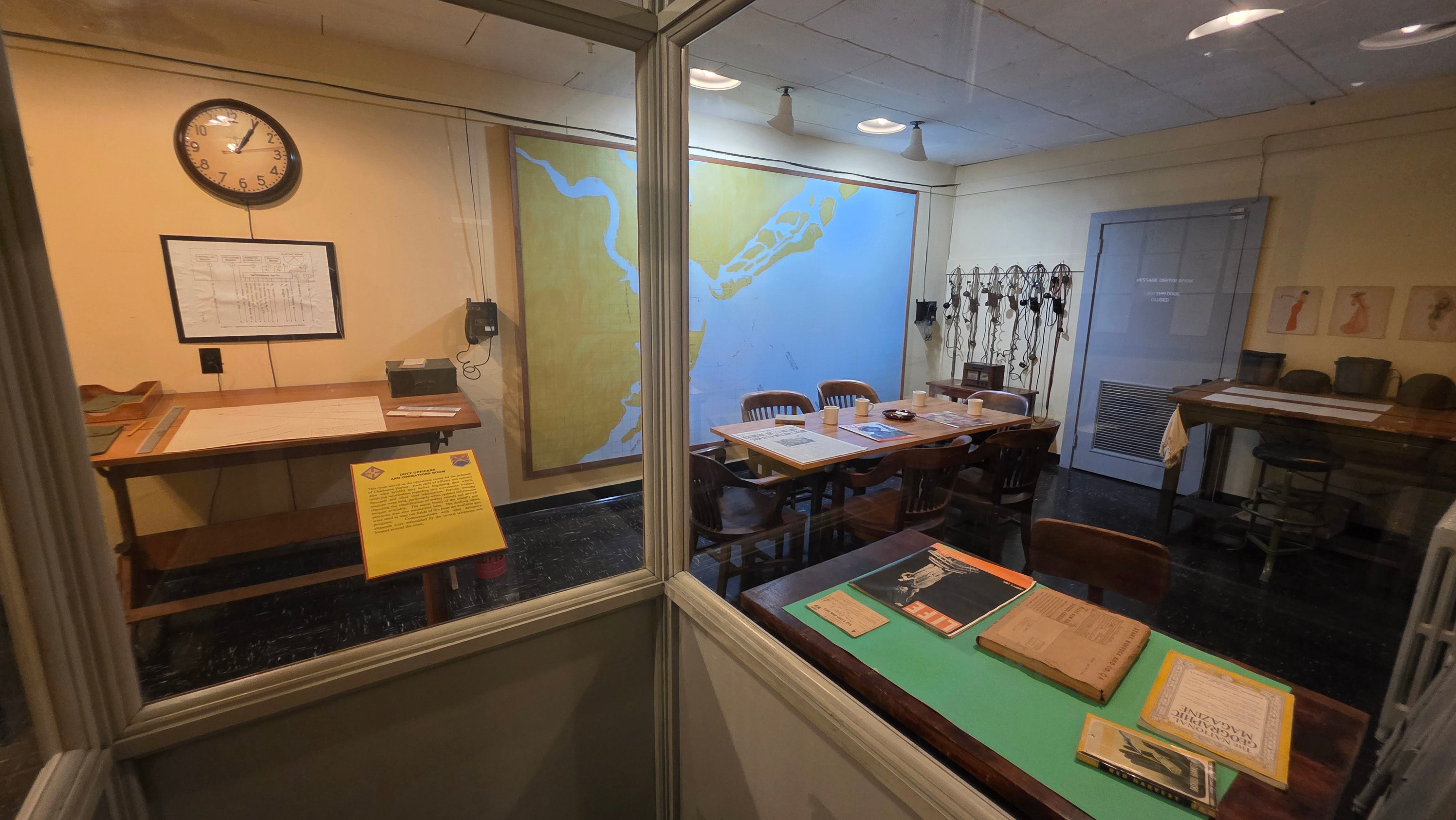
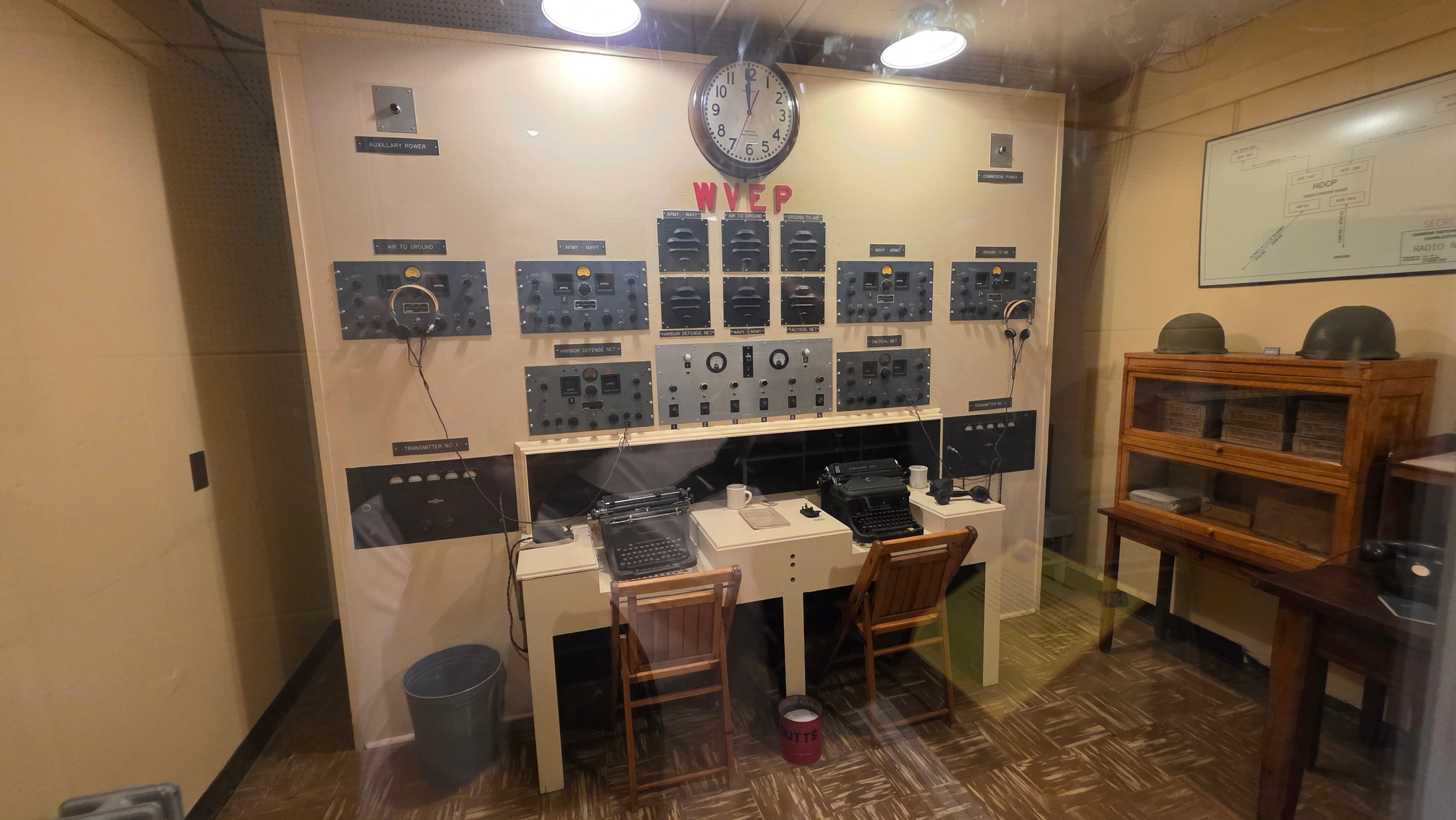
Preserved deep beneath the earthen mounds of Fort Moultrie are remnants of military equipment used during WW II. Here are pictures of the duty officer’s control room and the radio room.
Fort Sumter is visible out in the harbor, as seen from Fort Moultrie.
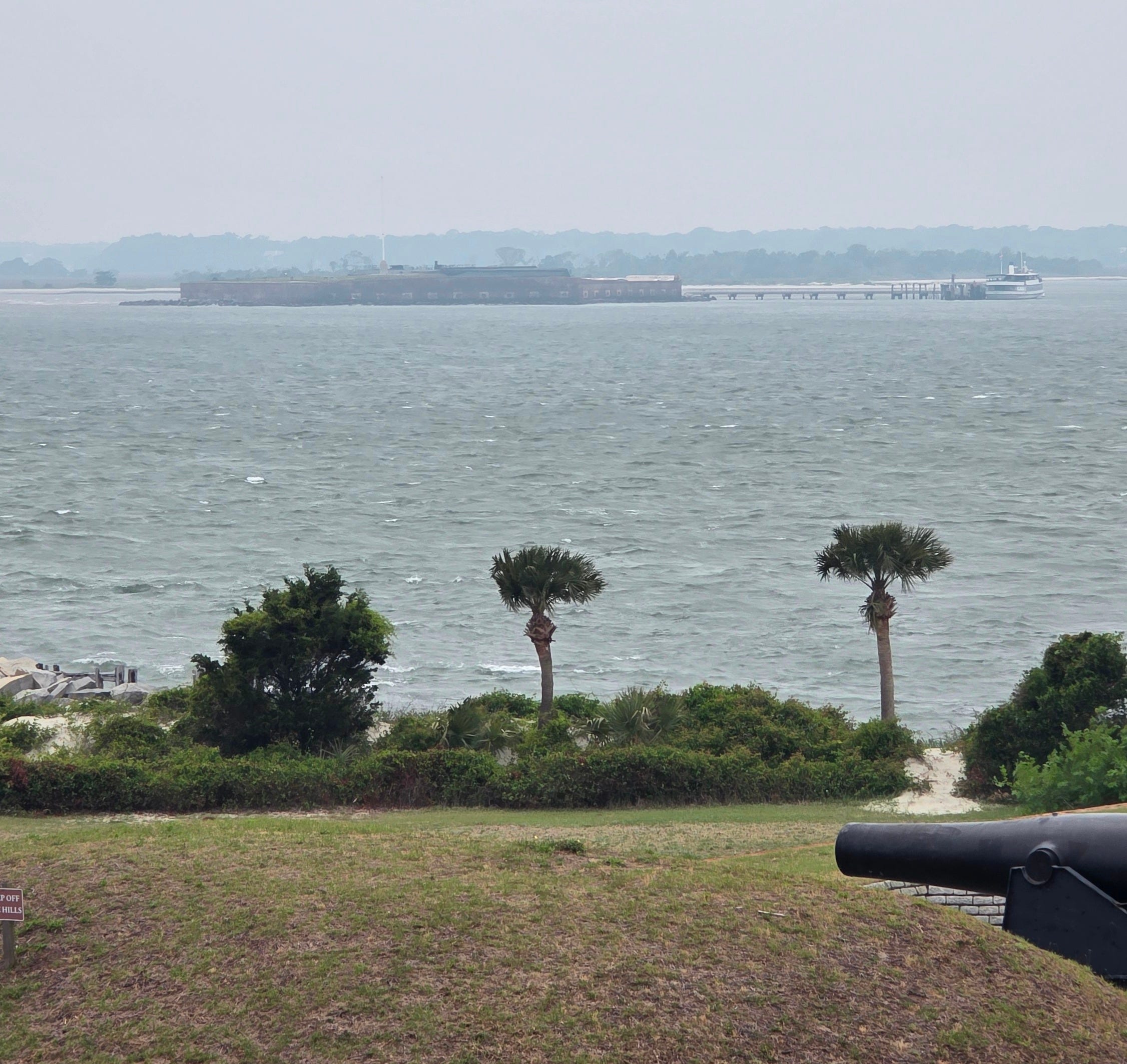
Why was Charleston so important, to the Confederacy and to the Union?
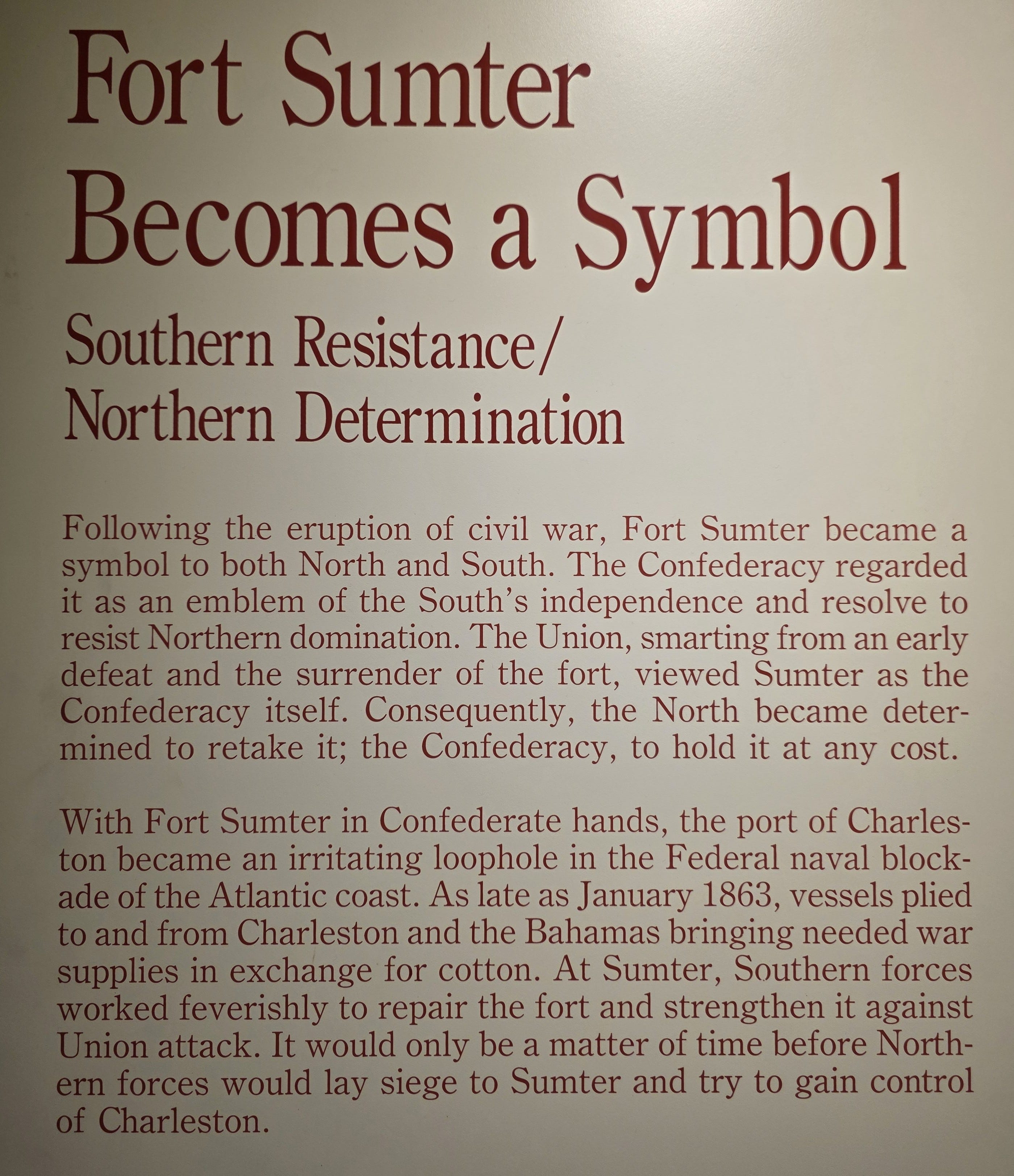
It was a fascinating day stepping through American history!
Fun facts:
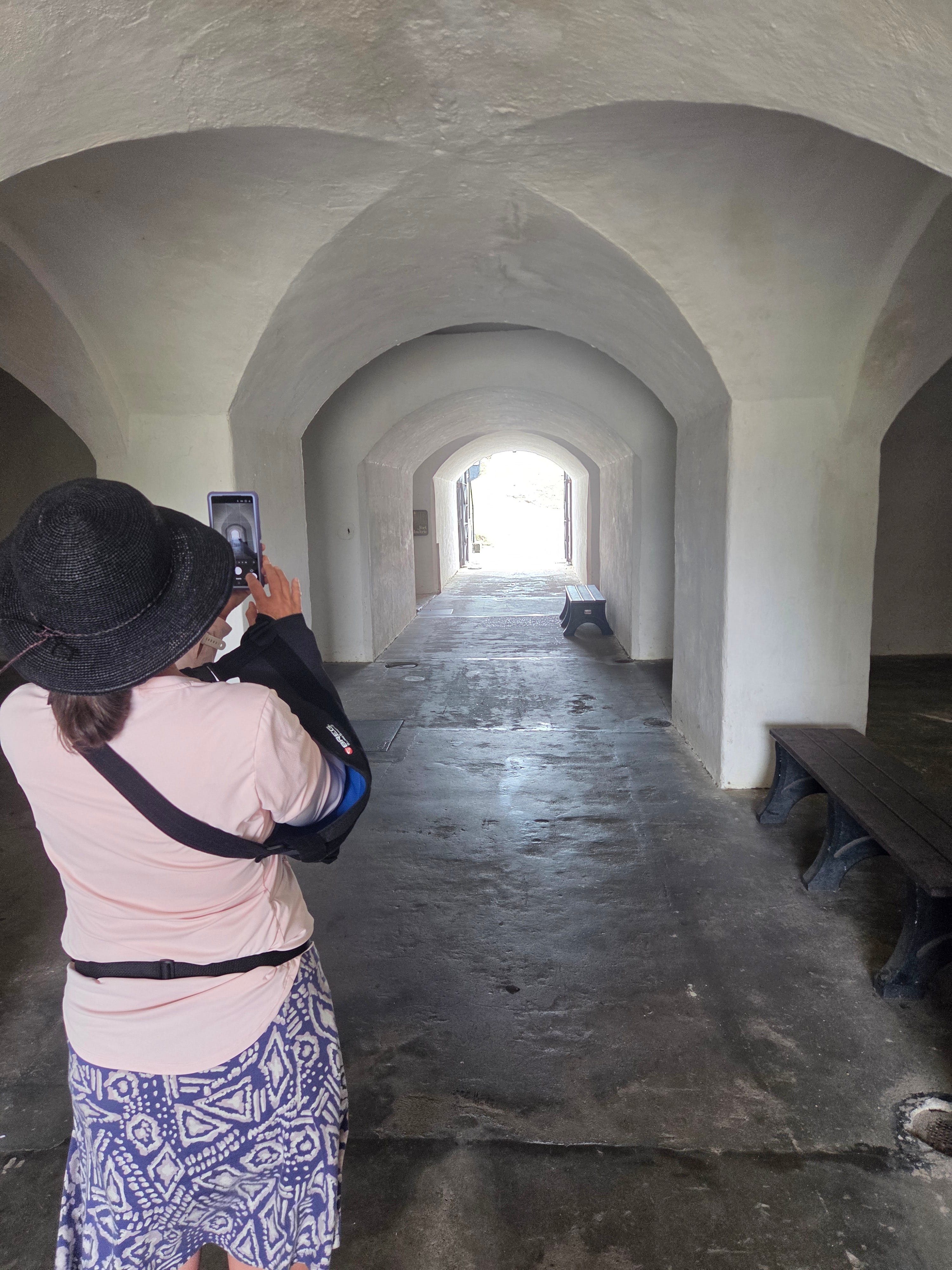
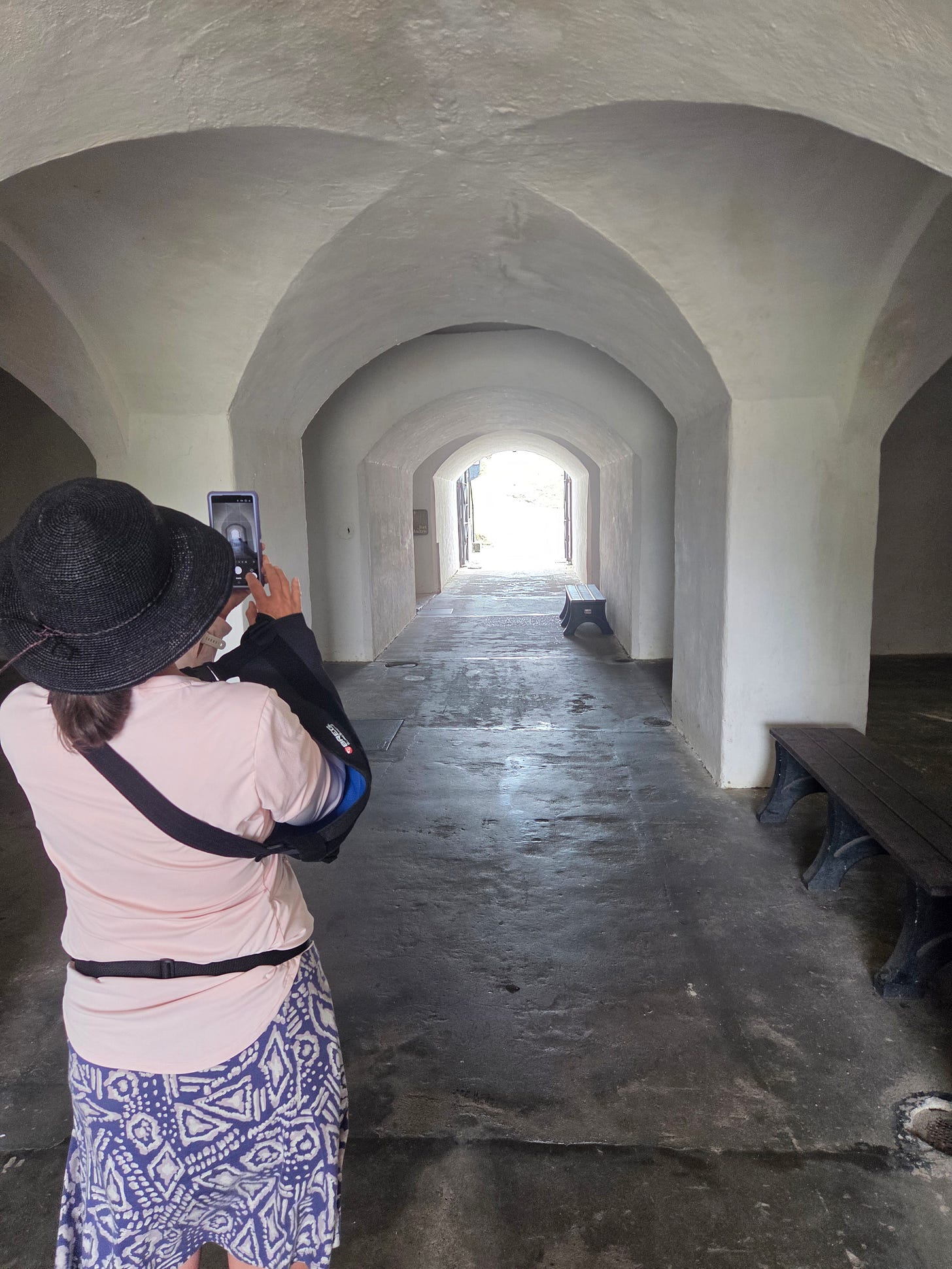
Both forts contained a design feature called the Sally Port. You can see it in the center of the picture below. The sally port is a secure, controlled entry way to a fortification, where “sally” is a military maneuver, typically during a siege, made by a defending force to harass isolated or vulnerable attackers before retreating to their defenses. Note: the “sally port” is not to be confused with “sally forth”.
Here’s Nancy photographing the inside of the Sally Port at Fort Moultrie. Can you imaging the defending American colonists massing here, ready to charge out at the attacking British in 1776?
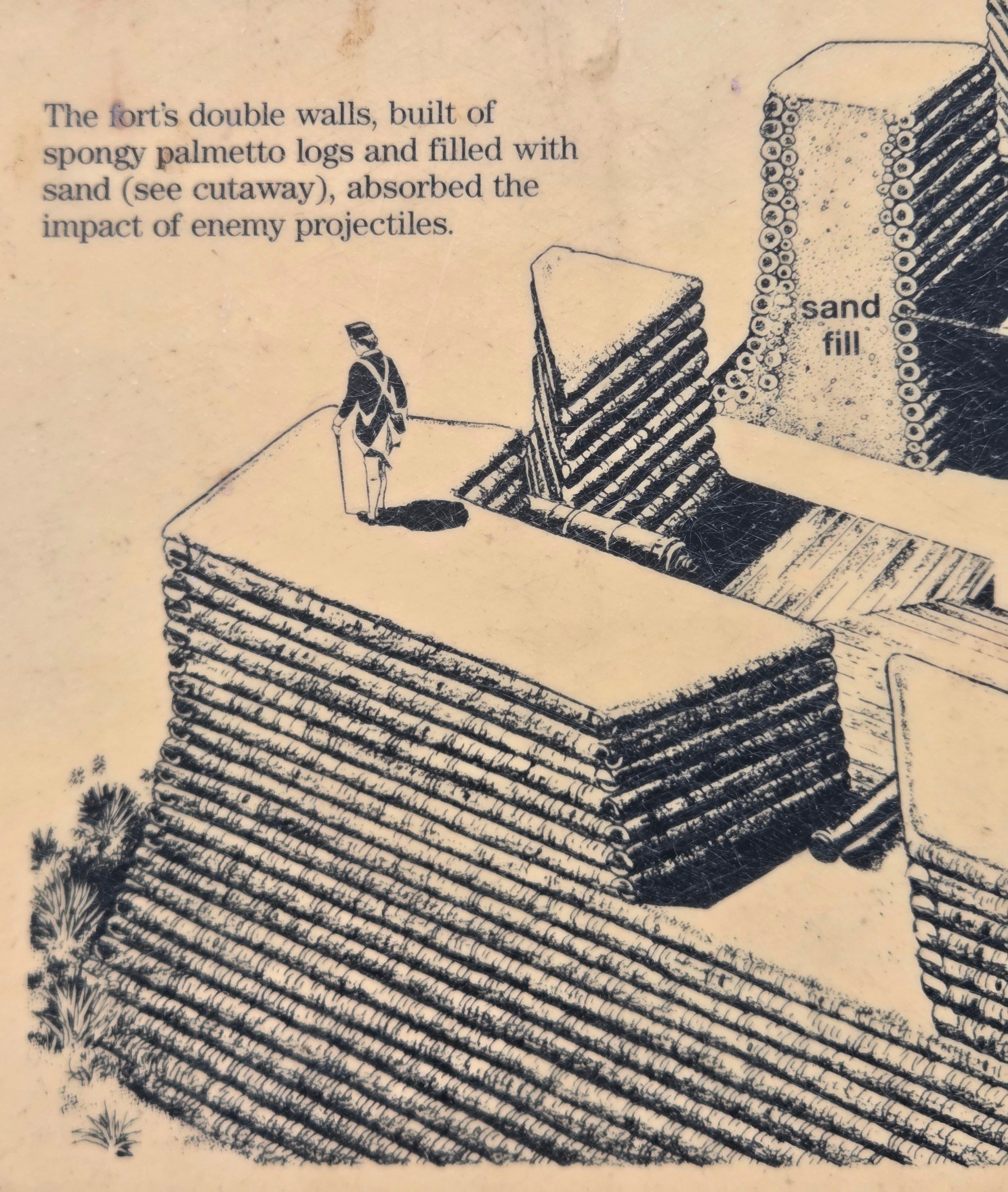
Fort Moultrie began as a mere Palmetto log fort. And just like the coquina stones used to build Castillo de San Marcos in St. Augustine, using local materials with special properties gave tactical military advantage. This palmetto log and sand construction absorbed much of the impact of enemy cannon fire!