Protecting St. Augustine
Castillo de San Marcos and Fort Matanzas National Monuments

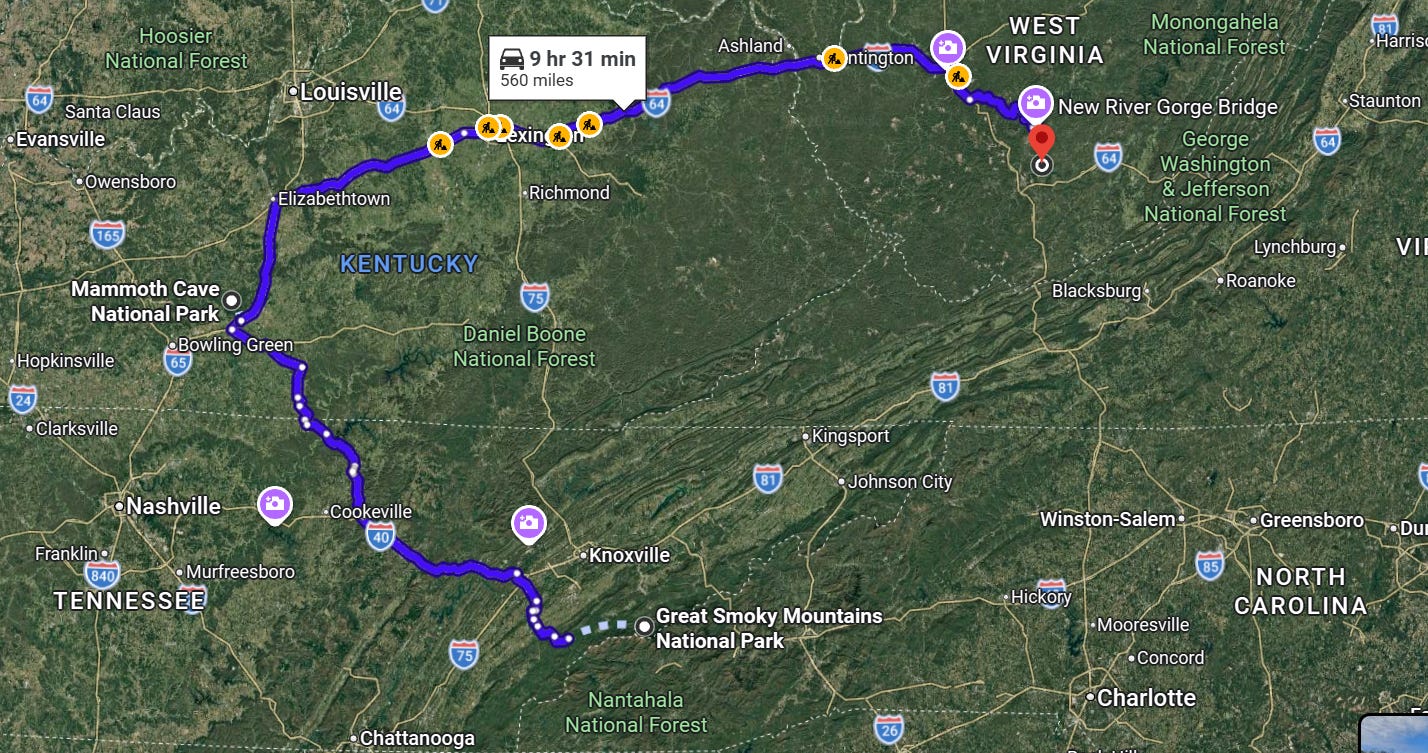
We’re on the road again, making our way north up the East Coast, and visiting National Parks along the way. Our plan is to see three parks — Great Smoky Mountains in North Carolina, Mammoth Cave in Kentucky, and New River Gorge in West Virginia …
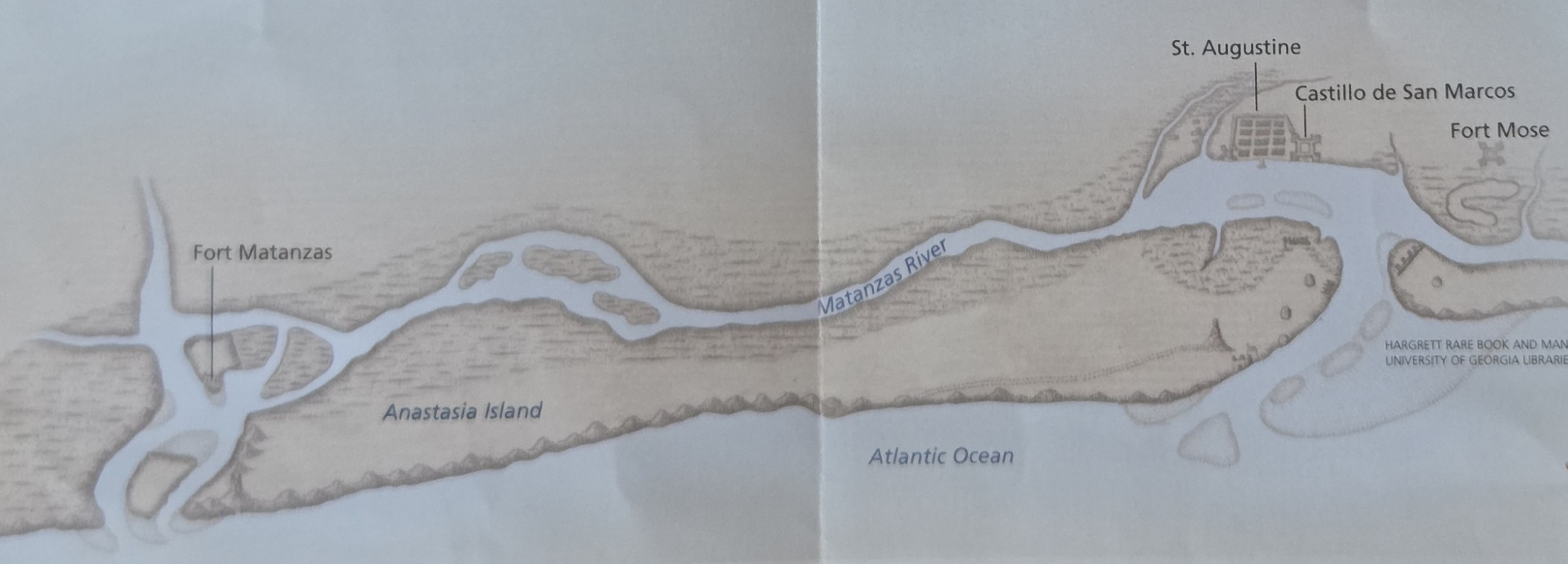
Our first stop was in St. Augustine, FL, where we got to visit two National Monuments — Castillo de San Marcos and Fort Matanzas, Spanish built forts that guarded the city, beginning in 1695 and 1742, respectively. (National Monuments? I thought this is a National Parks blog! Hey, what’s in a name?1 )
Castillo de San Marcos guards the St. Augustine harbor, while Fort Matanzas guards the “back door”, or the southern entrance up the Matanzas River.
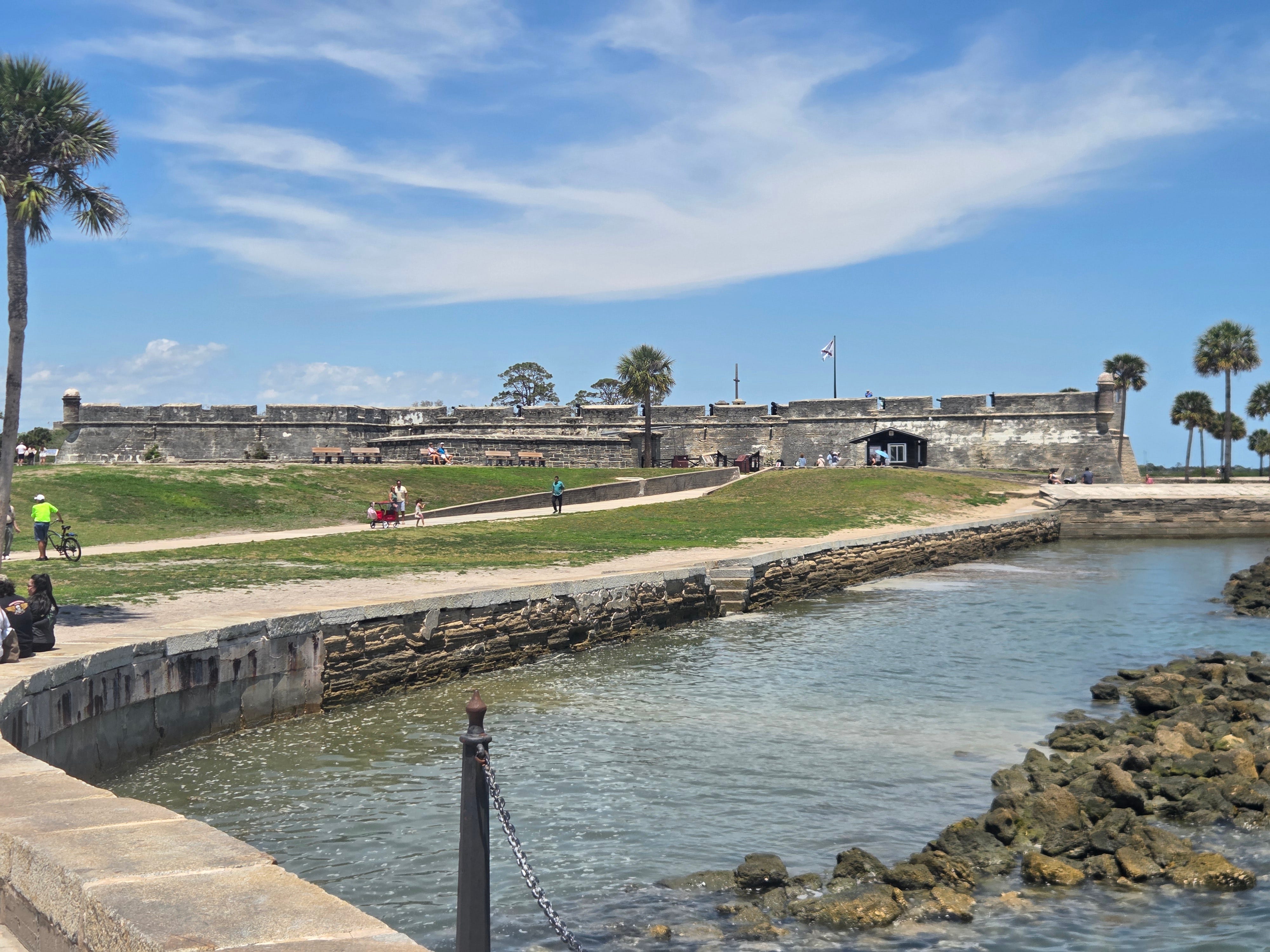
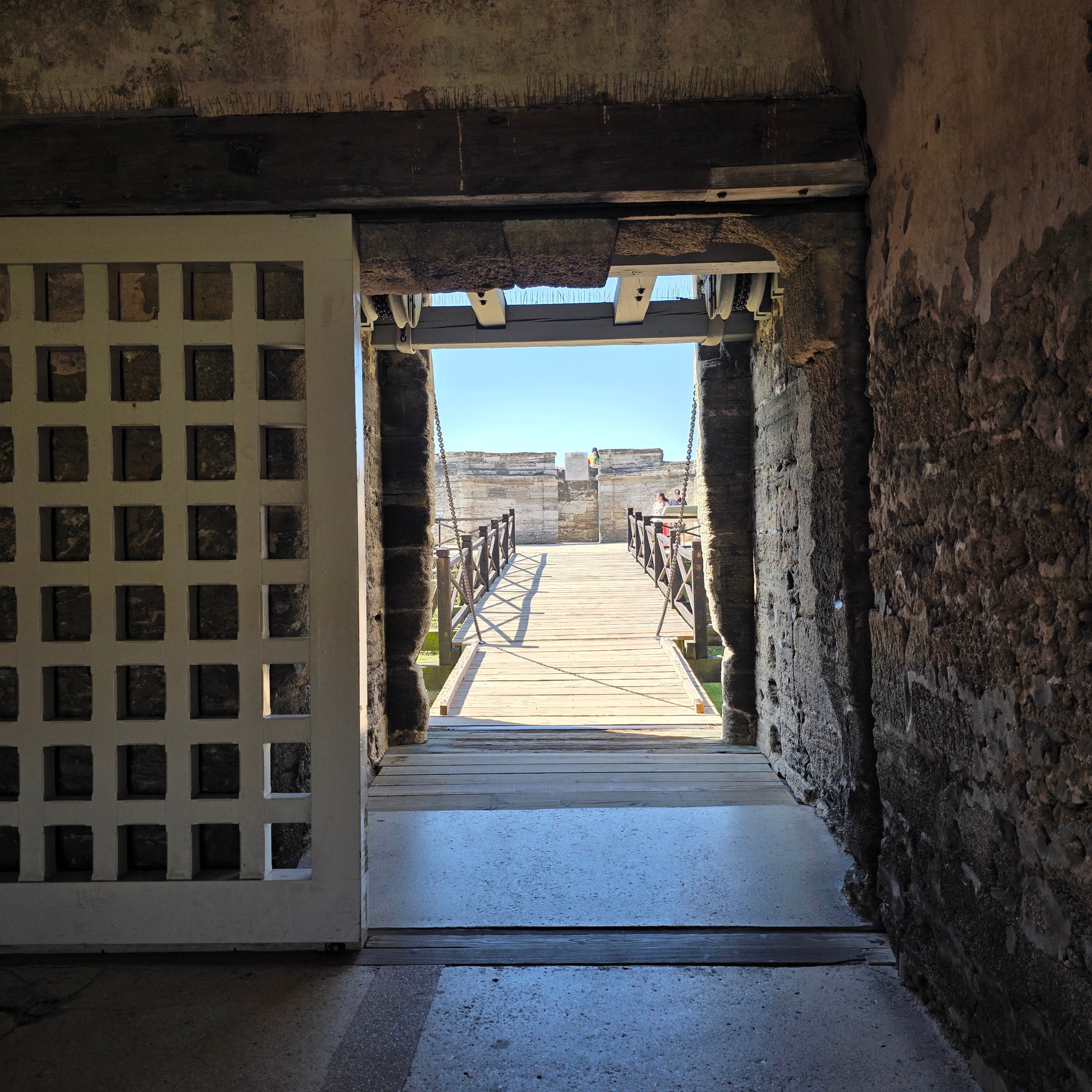
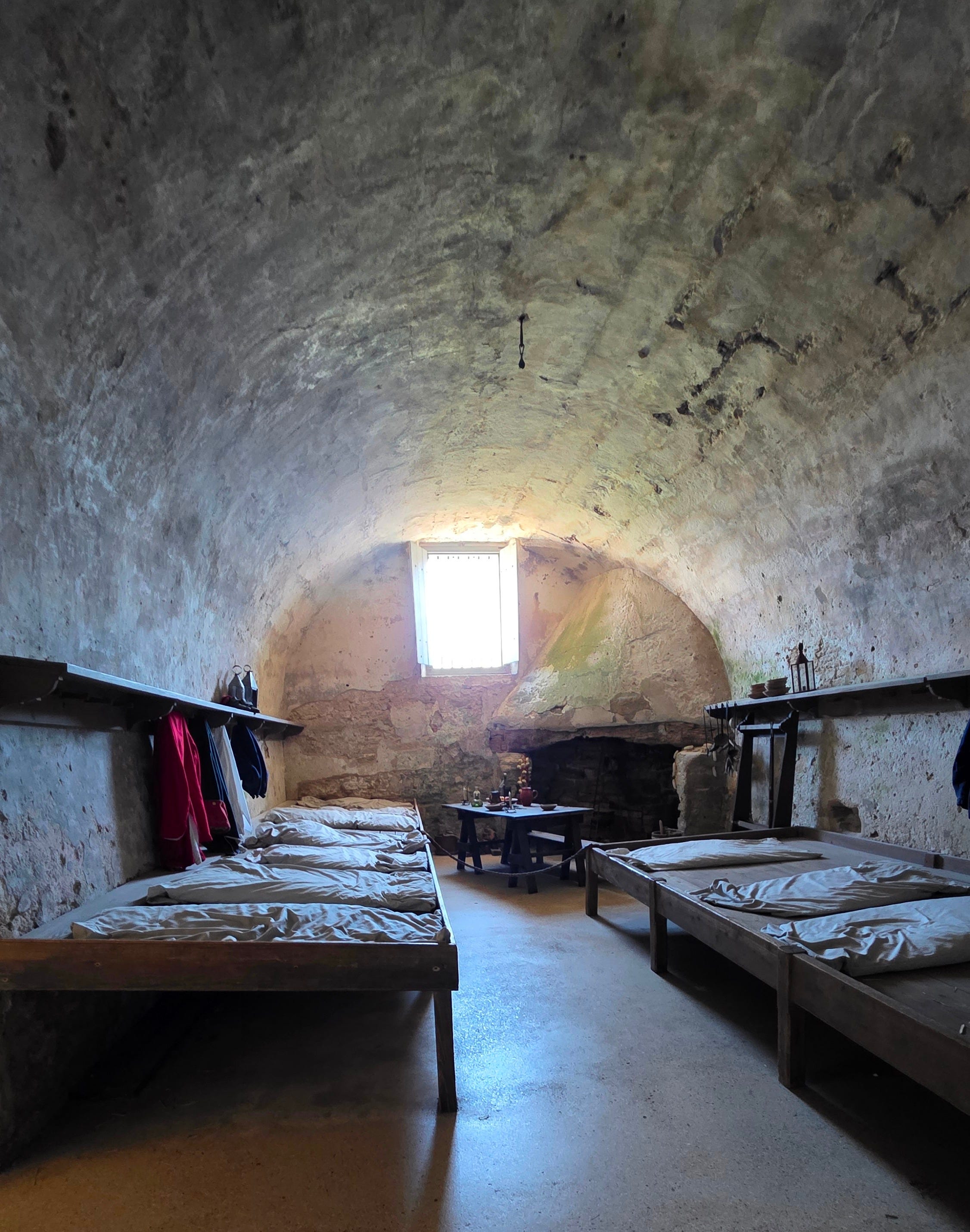
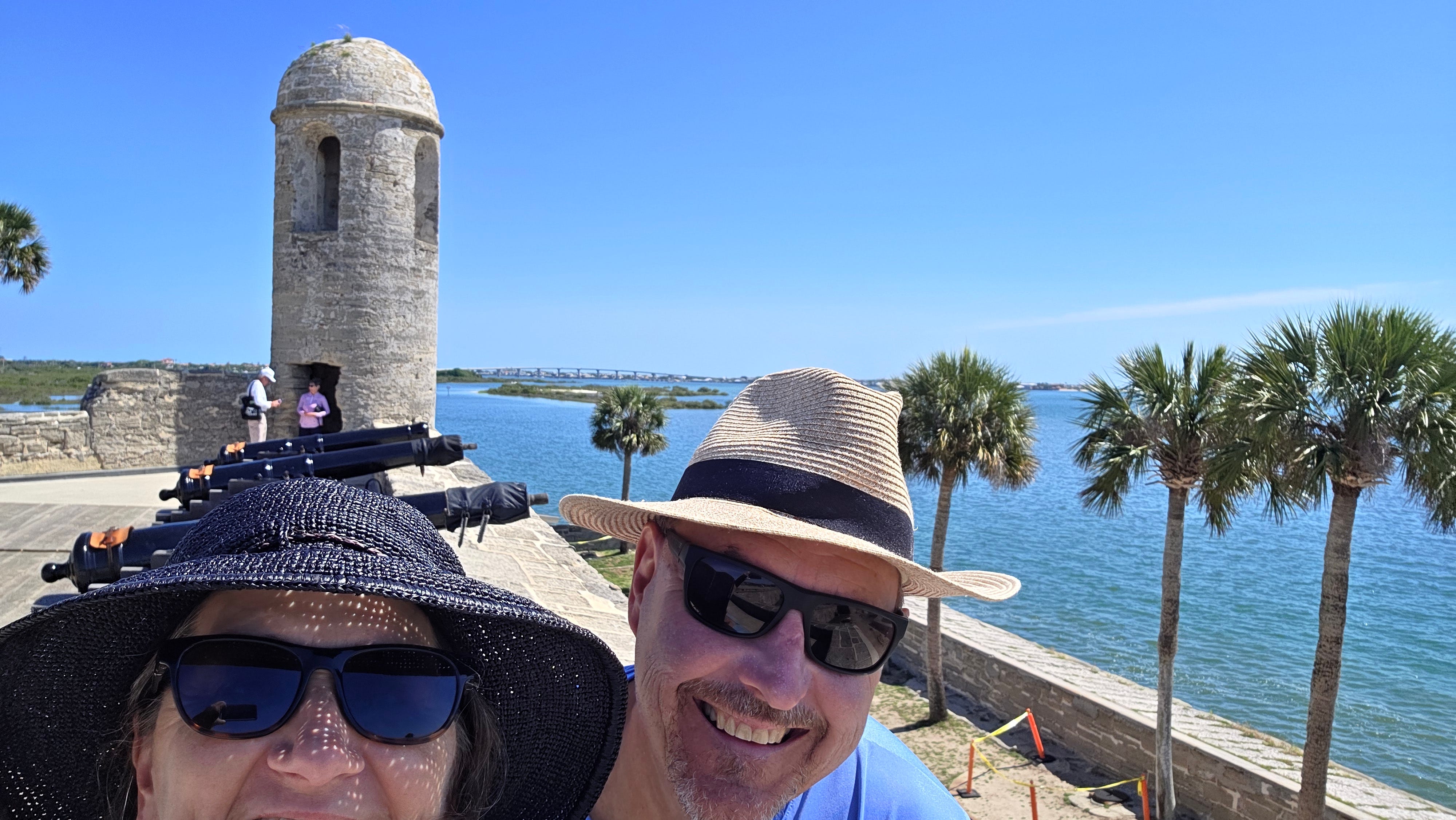
We took the self-guided tour of the larger Castillo de San Marcos, which is well preserved and has many displays showing how the fort was used over the years …
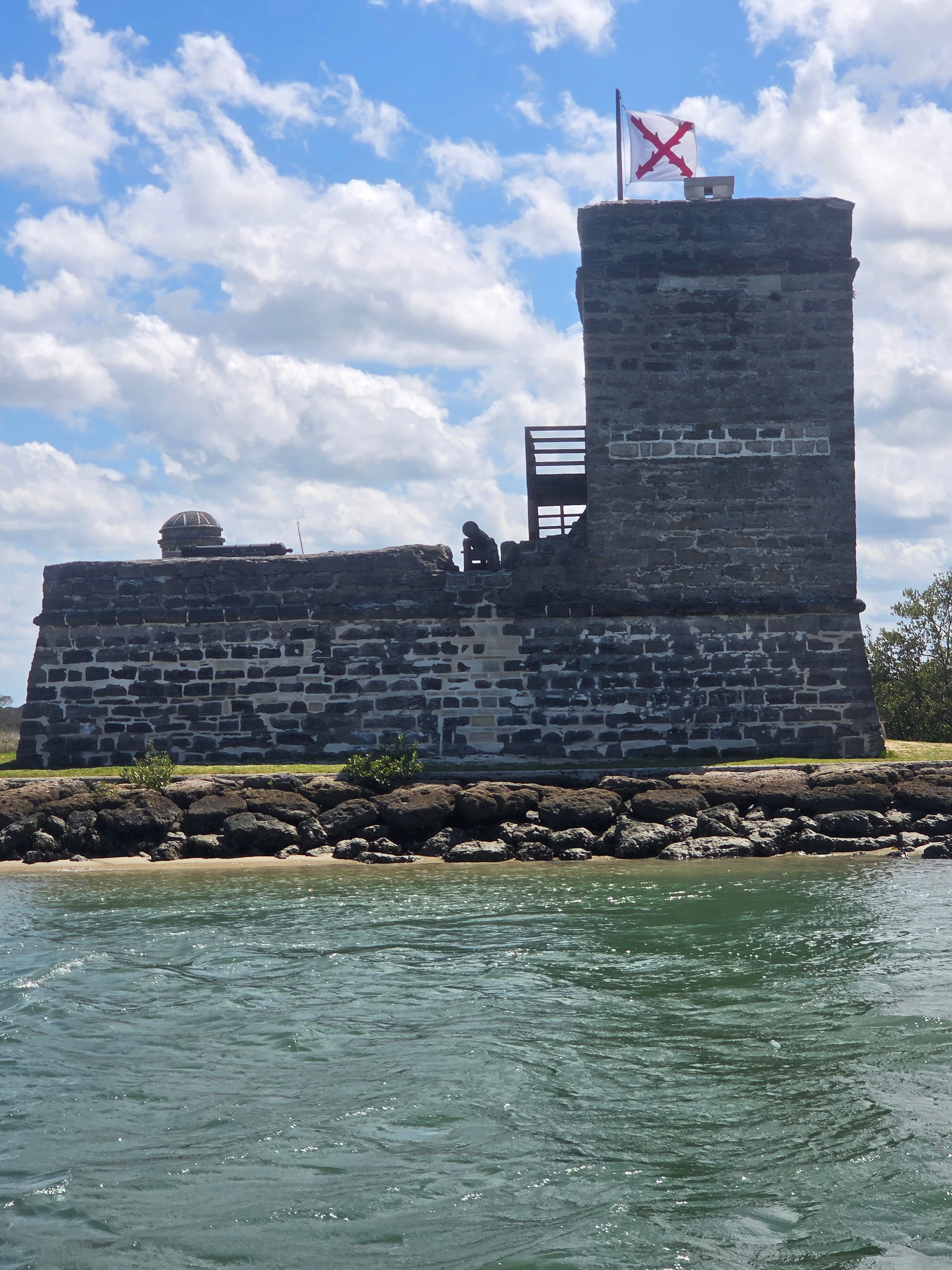
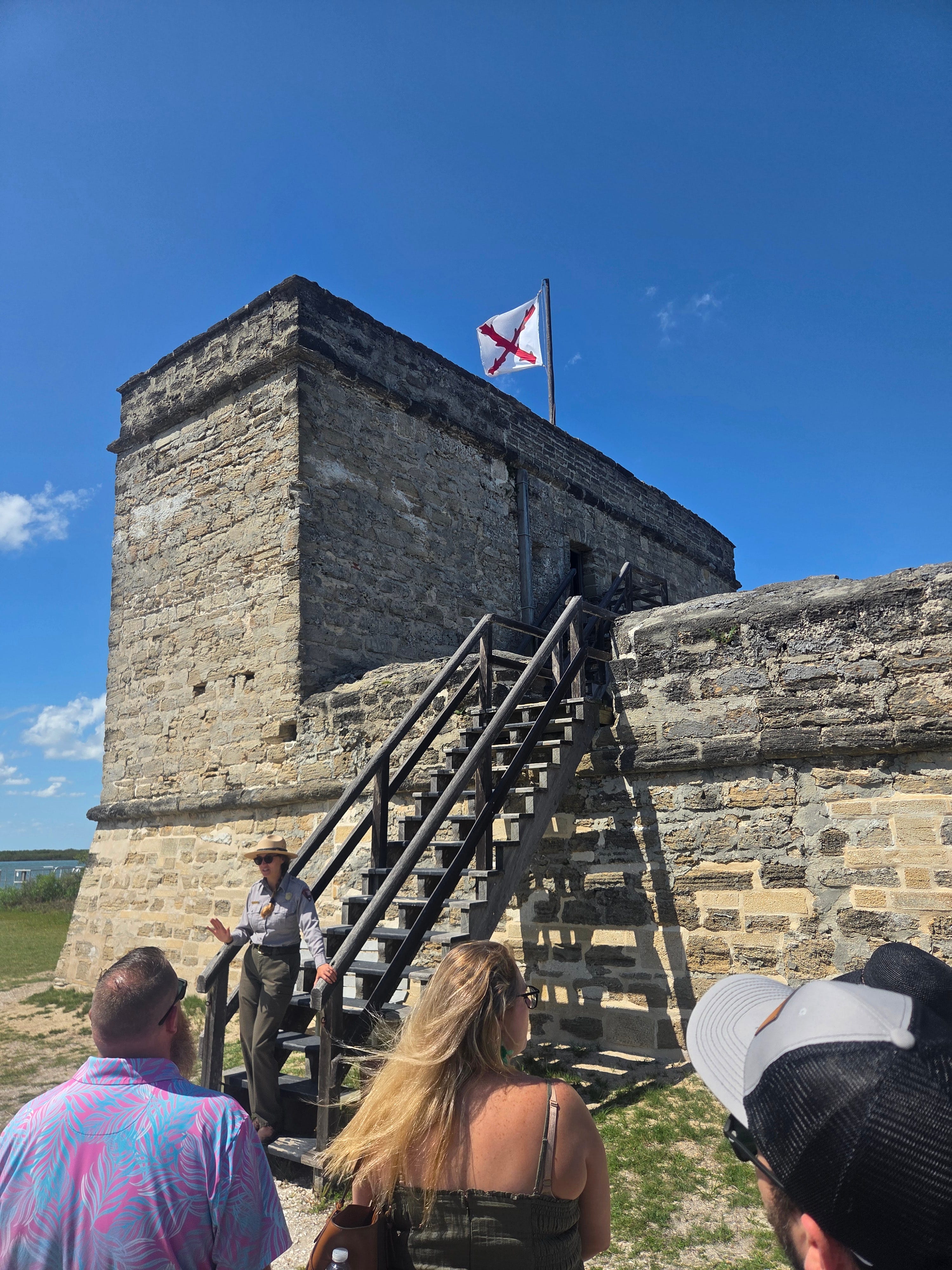
We also took the 5 minute boat ride to smaller Fort Matanzas and the ranger gave a good intro talk before letting us explore on our own …
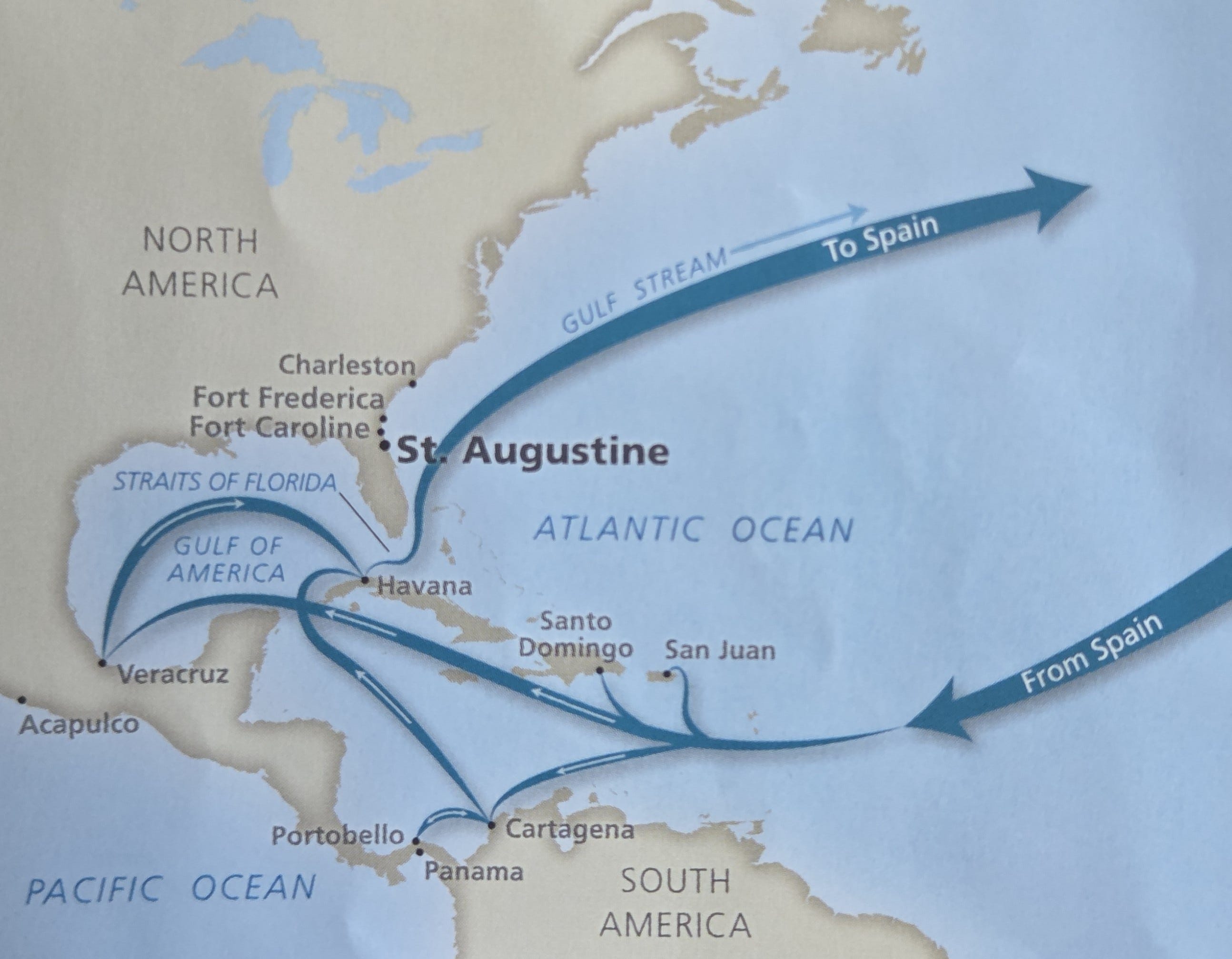
These forts are the product of ongoing global warfare that lasted for hundreds of years. After the discovery of the Americas, Spain, Portugal, Holland, France and England all sought to claim and control the New World and its immense wealth. Spain built these two forts, and many others, to protect her global empire and maintain the trade routes back to Spain. St. Augustine was an ideal location to defend the Guld Stream route.
A couple of “fun facts” for you.
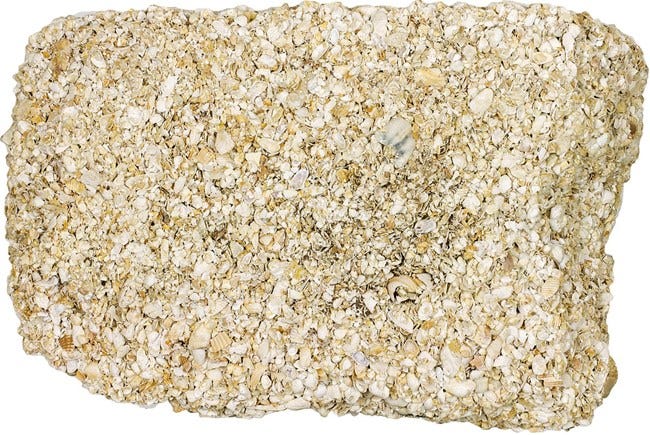
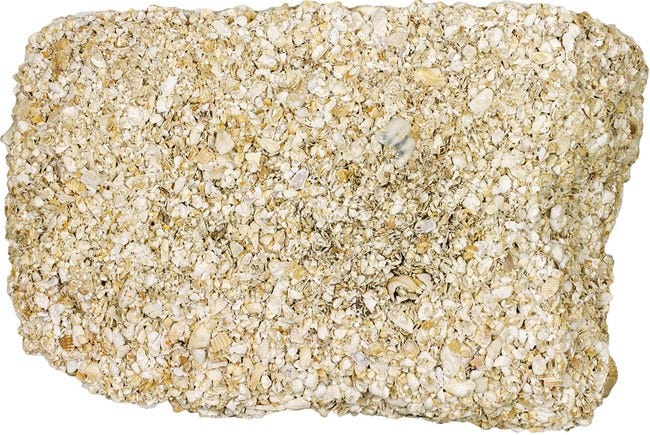
The forts were built using coquina, a local shellstone that was easy to quarry and remarkably effective at absorbing cannon fire rather than shattering. Unlike hard stone that would shatter, the porous coquina absorbed and “swallowed” cannonballs, making the walls virtually impenetrable to 18th-century artillery. The coquina stone saved St. Augustine, and may have changed the course of world history, too!
Fort Matanzas takes its name, which is Spanish for “slaughters”, from the events of 1565. The French had established an outpost in present day Jacksonville, which angered the Spanish, who sent troops to protect their investments in the present-day Caribbean. The Spanish ships landed to the south of Jacksonville, in present-day St. Augustine. 600 French soldiers sought to attack first, but a hurricane blew their attacking boats far to the south, eventually wrecking in present-day Daytona Beach. So the hungry, ship-wrecked French walked north, only to be captured by the Spanish at the site of what would become Fort Matanzas. The Spanish executed 111 Frenchmen, sparing only 16 Catholics and stone masons. Two weeks later, another group of ship-wrecked Frenchmen appeared, and 134 were massacred. And you thought you had a hard day?!
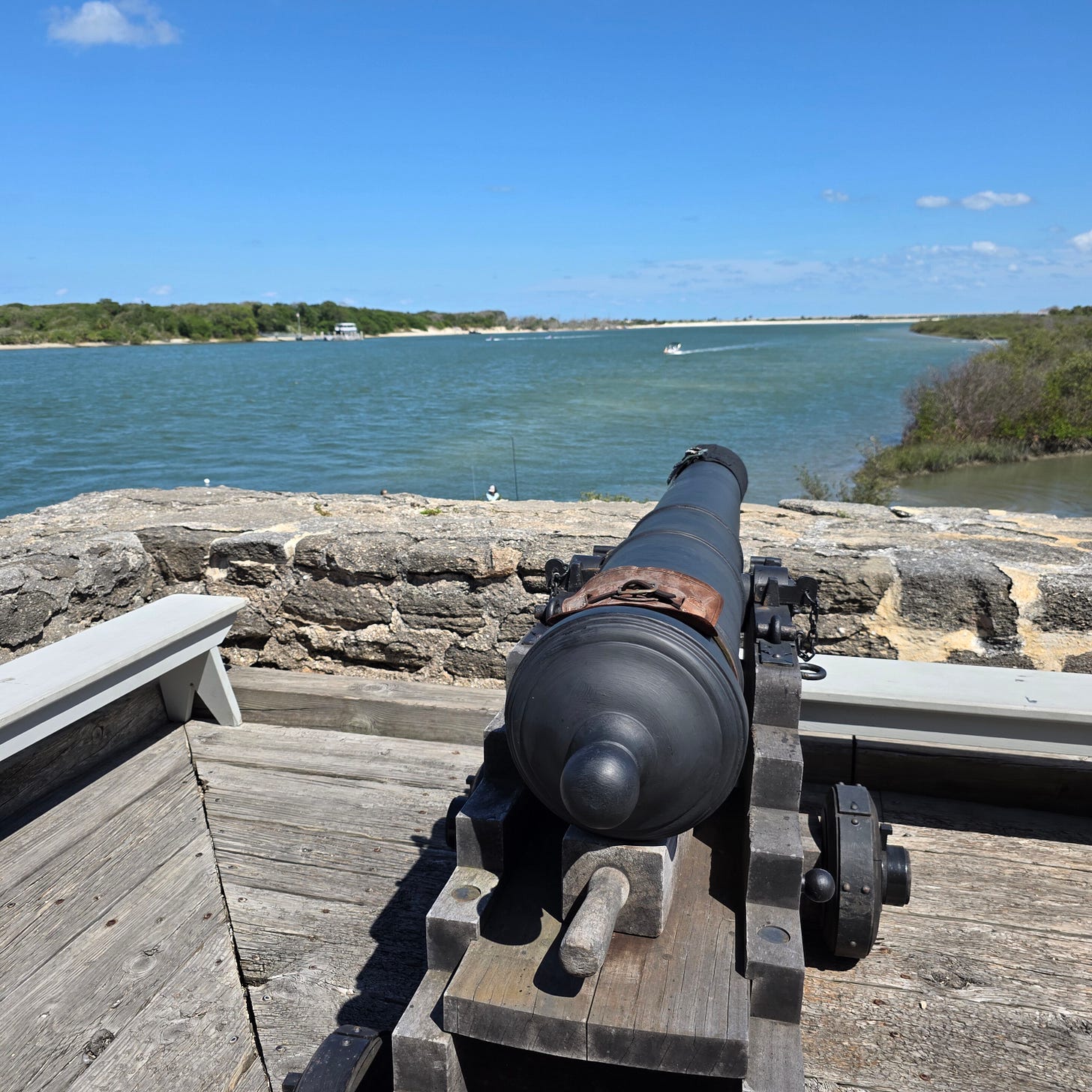
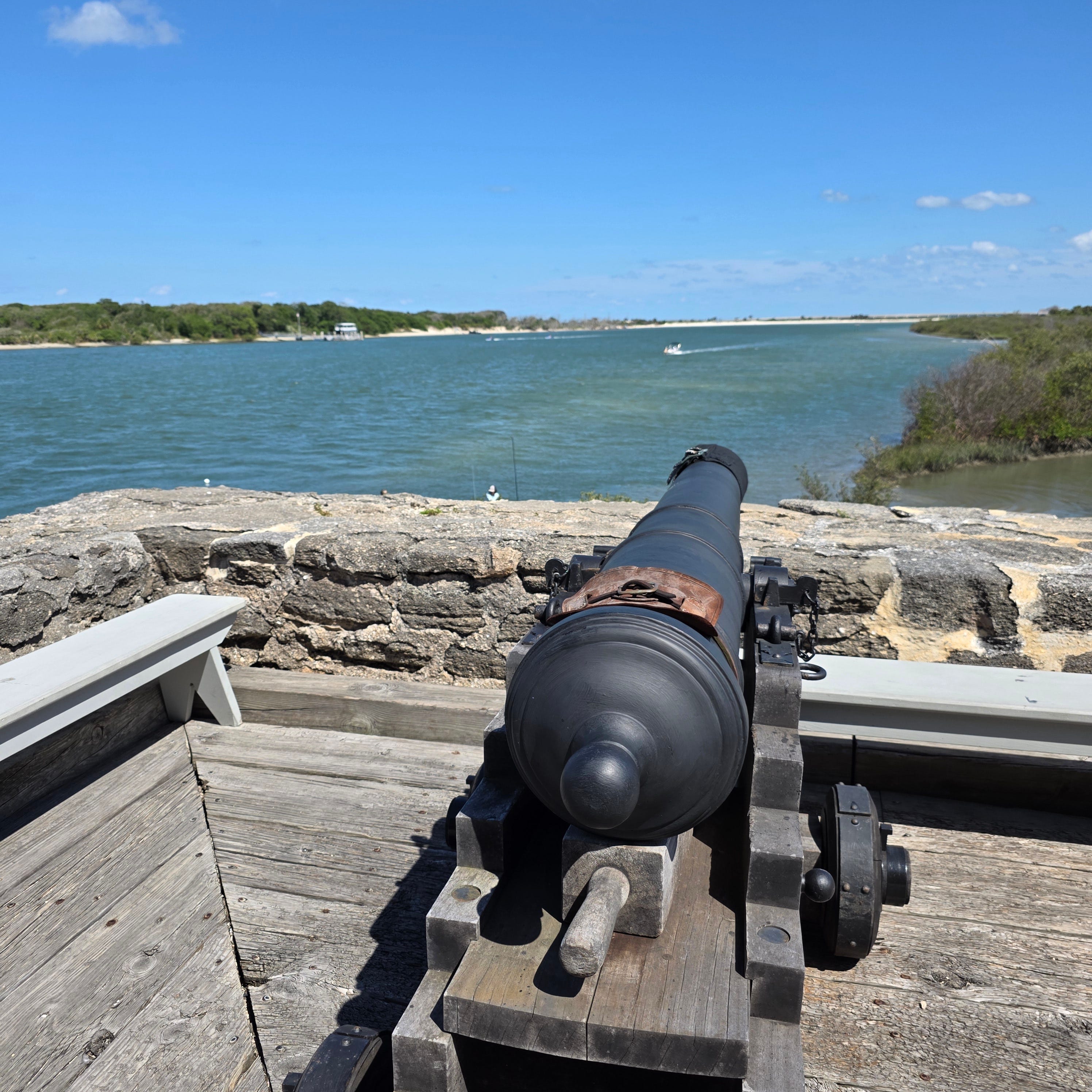
The Spanish were clearly advanced military planners of their time, as the placement of these forts yielded a clear tactical military advantage. Fort Matanzas sits almost a mile inland along the Matanzas Inlet, and the waters are shallow. Thus, only small ships, with small guns could enter. But the 5-pound and 8-pound cannons at Fort Matanzas had longer range, and could fire on approaching ships long before they could return fire. Castillo de San Marcos also sits inland on the deeper St. Augustine Inlet. But approaching large ships, with large guns, could not turn broadside in the narrow channel in order to fire on the fort, while being fired upon by the guns of Castille de San Marcos.
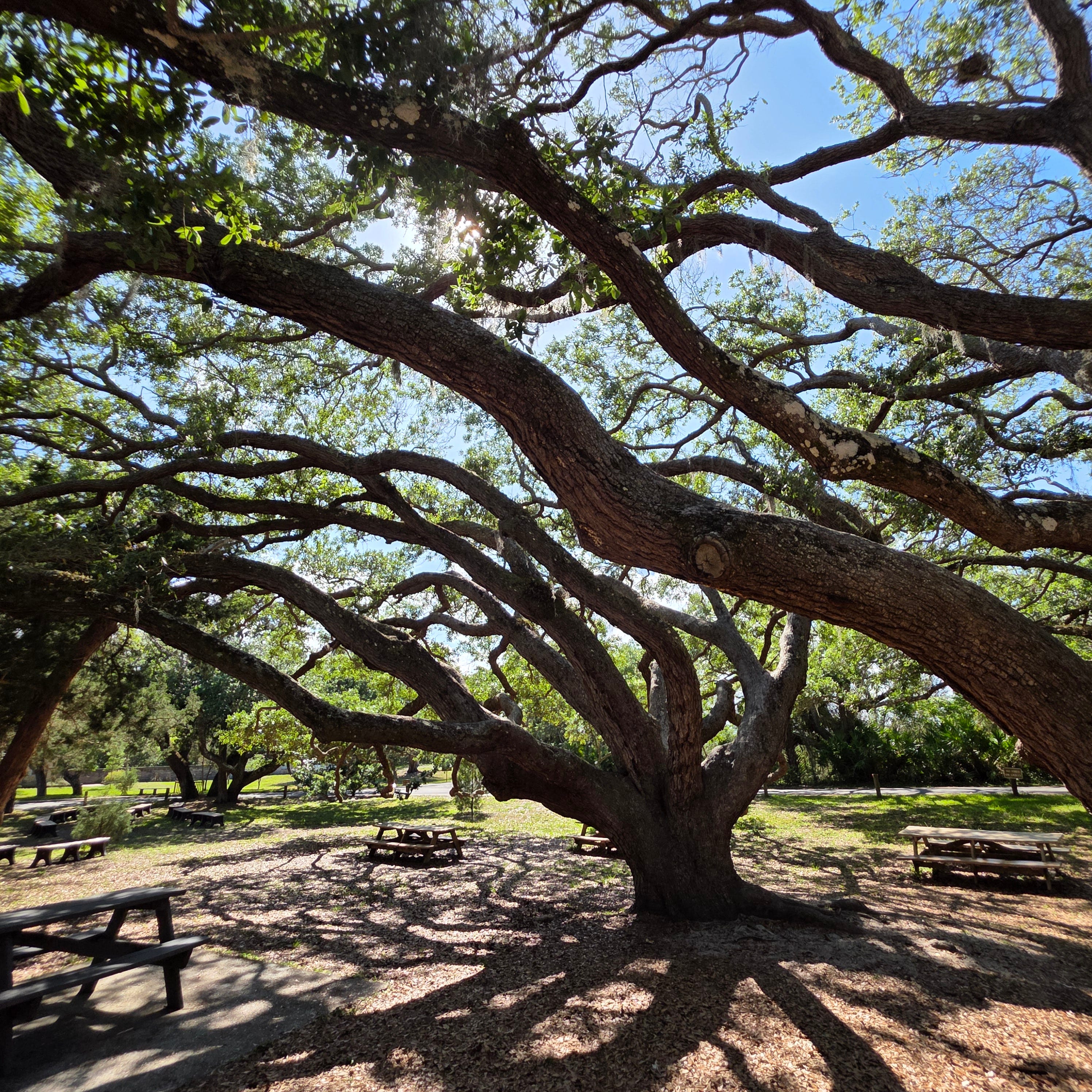
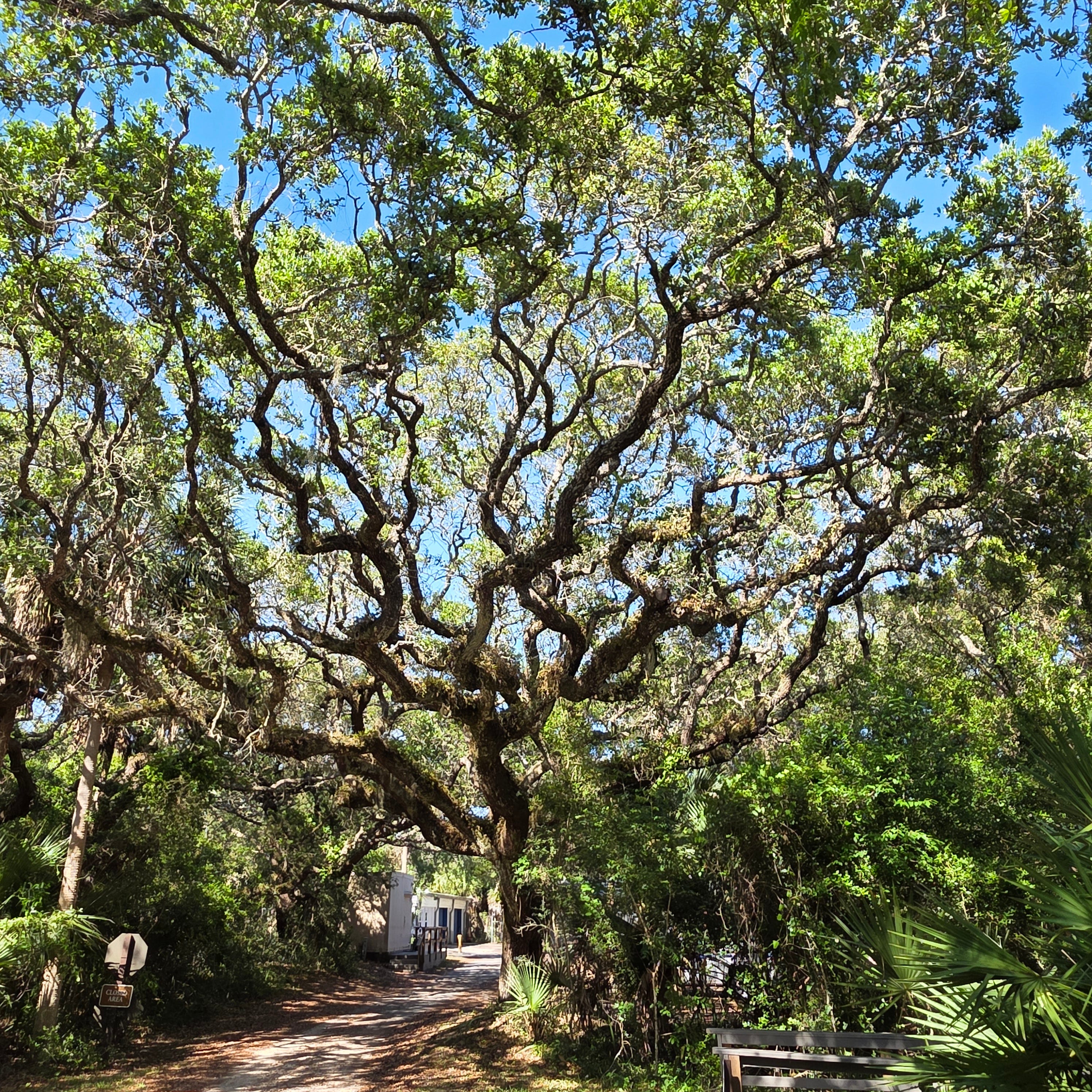
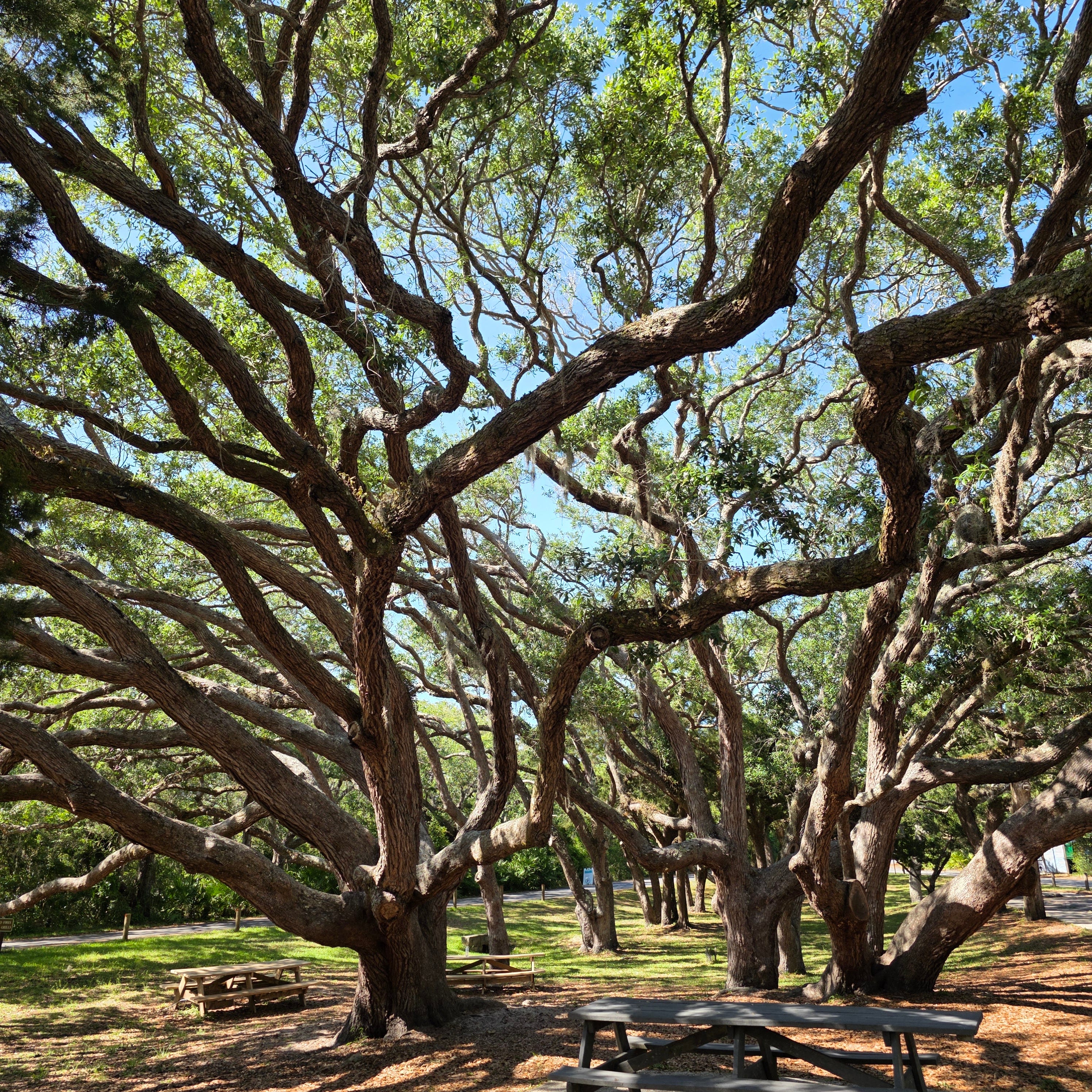
Many beautiful southern live oak trees can be seen in and around St. Augustine. The unique southern live oak (Quercus virginiana) sculpts itself in response to the salty air blowing in from the Atlantic Ocean. The long, twisting limbs host lichens, ferns and air plants.
Finally, a Pro Tip … Ladies, watch what you wear when visiting Fort Matanzas. A steep ladder leads thru a small hole in the roof to the observation deck. That small hole creates quite the updraft at all times of the day, given the prevailing easterly winds! Here’s a picture of the ladder, looking from the observation deck back down.
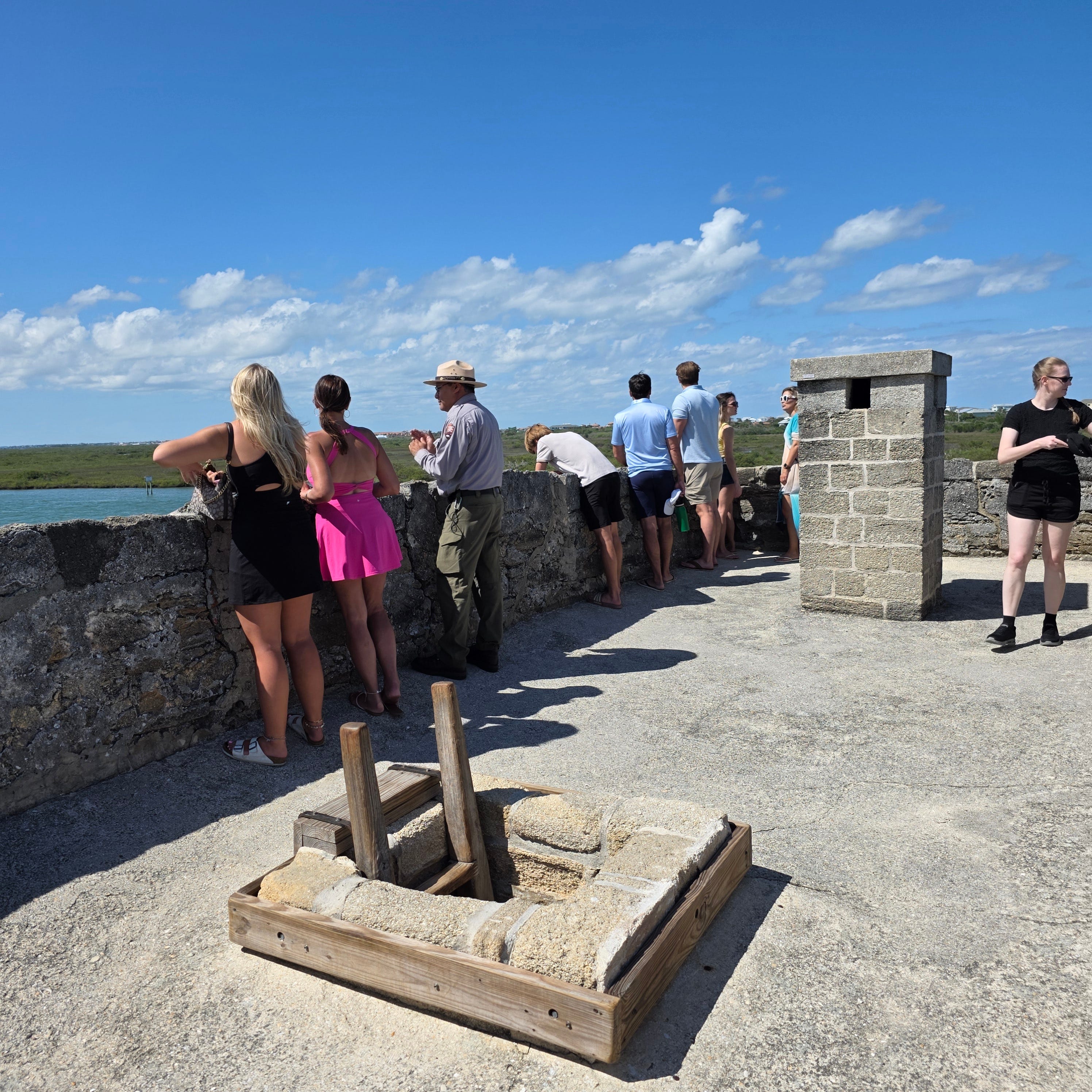
We won’t include any pictures that may or may not have been taken from the second floor looking up, as the ladies ahead of us showed more, much more, than they intended haha! (Hint: wear shorts or pants, not skirts.)
National parks are established by Congress to protect vast, scenic landscapes for recreation, whereas national monuments are usually designated by the President under the Antiquities Act to protect specific historical, scientific, or cultural features. While all national parks are managed by the NPS, monuments can be managed by the NPS, BLM, or Forest Service. See https://www.nps.gov/articles/nps-designations.htm
Both Castillo de San Marcos and Fort Matanzas are managed by the National Park Service.